Which Ride-Hailing App Is Cheapest in Singapore? All 7 Compared for 2026, Including the Hidden Fees That Flip the Ranking
Deals

Which Ride-Hailing App Is Cheapest in Singapore? All 7 Compared for 2026, Including the Hidden Fees That Flip the Ranking

Is Grab still worth it, or should you switch to Gojek, TADA, Ryde, CDG Zig, Geolah or Trans-Cab? Seven operators now hold a full Ride-hail Service Operator Licence from LTA, and what changed most in 2026 is not the fare. It is the two fixed charges bolted on top of it. Every operator raised its platform fee at the start of the year, and then four of them added a fuel surcharge on top: Grab and Gojek at 90 cents a trip, TADA at 90 cents to S$1.20 and CDG Zig at 50 to 80 cents, all extended to 30 September 2026 and passed to drivers in full. That makes Grab's real fixed cost S$2.10 a trip, not the S$1.20 platform fee most people quote, although Grab's is the surcharge that skips Standard and metered taxi rides. Two more charges never make it onto a comparison table: Trans-Cab's Smile Ride quietly runs its own S$0.60 driver fee to the same 30 September date on top of a platform fee that starts at S$0.80, and Ryde and Trans-Cab both bill a percentage transaction fee for paying by card, enough to cost Ryde the cheapest-app title above roughly a S$20 fare. Bigger still, and missing from every comparison we have seen: pay a metered ComfortDelGro or Trans-Cab taxi fare by credit card and 10% plus GST is added to it, which on a S$20 meter is more than any platform fee on this page. We compared every licensed ride-hailing app in Singapore on fares, platform fees, the fuel surcharge, card fees, driver commission and coverage.

Jamie Tan23 April 202613 min readUpdated 6 Sept 2026

Grab is not the only app licensed to take a booking here, and once you count every fixed charge it is not the cheapest either.

> Quick view: fixed charges per trip through 30 Sep 2026: Ryde S$1.25–S$1.47, Trans-Cab's Smile Ride S$1.40–S$2.10, CDG Zig S$1.50–S$2.10, Grab a flat S$2.10, Gojek up to S$2.60. The catch nobody prices in is the card charge: Ryde bills 1.96% on cashless payment, Trans-Cab 2.78%, and both ComfortDelGro and Trans-Cab add 10% plus GST to a metered taxi fare paid by credit card.

1
Grab logo

Grab

Singapore's dominant ride-hailing platform and the most reliable for availability, especially during peak hours and in less central areas. The line-up is the widest here: Standard car or taxi, a fixed-fare taxi option, Metered Taxi, Premium and Premium Executive, Saver Share and Saver Hitch for carpooling, plus kid-friendly, pet-friendly and wheelchair-accessible rides. The catch in 2026 is that Grab now stacks two fixed charges on every trip. The platform fee is S$1.20 per transport ride from 1 January 2026, up 30 cents from 90 cents, which Grab attributed to higher CPF contributions for drivers under the Platform Workers Act. On top of that sits a fuel surcharge: Grab renamed its existing 50-cent Driver Fee and raised it to 90 cents from 7 April 2026 as pump prices climbed, and after two extensions it now runs to 30 September 2026. Read that one precisely, because it carries an exclusion the other operators' versions do not: the 90 cents applies to all transport bookings EXCEPT Standard and metered taxi rides, so a Grab-booked taxi still costs only the S$1.20 platform fee. On everything else, add them up and Grab's fixed cost is S$2.10 a trip before you have moved, the highest on this list, and the reason a Grab quote can beat a rival's fare estimate yet lose at the payment screen. In fairness, the surcharge is a straight pass-through: Grab takes no commission on it and every cent reaches the driver. Note also that GrabRewards no longer exists. It was replaced by GrabCoins in November 2025, membership tiers were scrapped from January 2026, and coins now expire six months after you earn them. Old balances converted 1:1, but the earliest converted coins expire on 31 July 2026, so check and spend yours. GrabUnlimited is a separate paid subscription (around S$5.99/month on renewal) that is weighted towards delivery rather than rides. Best for reliability and island-wide coverage.

Not a discount, just the fine print: platform fee S$1.20 per transport ride from 1 Jan 2026 (up from 90¢), PLUS a S$0.90 fuel surcharge extended to 30 Sep 2026, so S$2.10 in fixed charges before the fare, though the surcharge does NOT apply to Standard or metered taxi rides, where you pay the S$1.20 fee only. The surcharge goes to drivers in full. GrabRewards was replaced by GrabCoins, tiers were scrapped in Jan 2026, and coins expire 6 months after they are earned. The earliest converted balances lapsed on 31 Jul 2026, so check your coin expiry in the app

Get Deal
2
Gojek logo

Gojek

The Indonesian super-app giant entered Singapore as a strong Grab alternative and has built a loyal following with consistently lower base fares. Its driver pool has grown significantly and wait times are now comparable to Grab in most areas. The Singapore line-up is GoCar (up to 4 adults), GoCar Flash for a faster pickup, GoCar XL (up to 6), GoCar Premium and Premium XL, GoCar Kids and XL Kids with a booster seat for children aged 4 to 7, GoTaxi, and GoCorp for company travel. One correction worth making, because it is repeated a lot online: the GoPay wallet and GoTagihan bill-payment features are Indonesian products and are not available to Singapore riders: here you pay by card, cash or DBS PayLah!. What is no longer true is the second half of that claim: Gojek does now run a points programme. Link your yuu account and you earn 1 yuu Point for every S$1 on completed trips, GoTaxi excluded, and since 22 June 2026 you can spend those Points on fares in-app at 200 Points to S$1 off, stacked on top of any voucher. Two changes landed in the last fortnight. From 27 August 2026 Gojek also routes GoTaxi booking requests to Zig by ComfortDelGro's fleet, so a GoTaxi can arrive as a ComfortDelGro cab: you pay the amount shown in the app, but live chat, destination edits and in-app tipping are not available on those trips. And on 2 September 2026 it launched GoCar Nearby, a flat fare capped at S$9.90 for trips under 5km booked between 10am and 5pm with both pickup and drop-off inside the East and North-East regions, on which vouchers cannot be used. Gojek raised its platform fee by 20 cents from February 2026, so passengers now pay between S$1.10 and S$1.70 a trip, up from a range of 90 cents to S$1.50, and it added a flat 90-cent fuel surcharge in April 2026, now extended to 30 September 2026, which brings the fixed charges to S$2.00–S$2.60 a trip. Like the other operators, Gojek passes that surcharge to drivers in full and takes no commission on it; it also rolled out a fuel support package for its Singapore driver-partners in April 2026. Best for regular commuters looking to reduce their monthly ride spend.

Platform fee S$1.10–S$1.70 per trip from Feb 2026 (up 20¢ from 90¢–S$1.50), PLUS a S$0.90 fuel surcharge on all trips, extended to 30 Sep 2026 and passed to drivers in full, so S$2.00–S$2.60 in fixed charges before the fare. Pay by card, cash or DBS PayLah!; GoPay and GoTagihan are Indonesia-only and not available here. It does have a points programme despite what most guides say: 1 yuu Point per S$1 on completed trips (GoTaxi excluded), redeemable in-app at 200 Points to S$1 off. New: GoCar Nearby, a flat fare capped at S$9.90 on sub-5km East and North-East trips booked 10am-5pm, launched 2 Sep 2026 (no vouchers on it), and from 27 Aug 2026 GoTaxi requests also go to Zig by ComfortDelGro taxis. Gojek's own promo page currently lists code ONE4ALL for S$4 off a ride of S$22 or more, weekdays 5pm-midnight and weekends noon-midnight, and TRYGOJEK for S$8 in vouchers for new or lapsed riders

Get Deal
3
TADA logo

TADA

TADA's unique selling point is zero commission charged to drivers, and it has held that line since launching in Singapore over seven years ago. Drivers keep more, which shows up as better retention and competitive fares. It is now a serious operator rather than a plucky challenger: TADA counts roughly 40,000 drivers here, close to half of Singapore's private-hire fleet, has passed 150 million trips globally, and reported three consecutive years of operational profitability heading into 2026. The most useful thing about it this year is what it did NOT do. On 25 February 2026, while other operators were raising platform fees, TADA committed to keeping its fee structure unchanged for all of 2026, citing affordability. Its rider platform fee sits at roughly S$1.05 to S$1.25 before GST. Read the commitment precisely, though: it covers the platform fee, not the separate fuel support charge TADA introduced in April 2026, which adds S$0.90 on fares up to S$18 and S$1.20 from S$18.10 and has been extended to 30 September 2026, and that one is passed to drivers in full. Fares still move with demand, so treat it as cheaper-on-average rather than surge-free. Driver availability can be thinner than Grab in outlying areas at peak. Best for the lowest all-in cost on most everyday trips.

0% driver commission since launch. Platform fee ~S$1.05–S$1.25 before GST, and TADA committed on 25 Feb 2026 to hold its fee structure unchanged for all of 2026 while other operators raised theirs. Note the separate fuel support charge, extended to 30 Sep 2026: S$0.90 on fares up to S$18 and S$1.20 from S$18.10, passed to drivers in full. Around 40,000 drivers in Singapore

Get Deal
4
Ryde logo

Ryde

Singapore's home-grown platform, and the other operator on this list running 0% commission for drivers, which applies to both private-hire and taxi drivers. Ryde runs three services: ride-hailing across a range of private-hire tiers, carpooling, and point-to-point parcel delivery, which among the pure ride apps here only Geolah also offers, and its version is still in beta. Carpooling remains its most distinctive product and is genuinely worth it on a fixed commute where you can share the cost of the same route every day. Rider platform fees are among the clearest published in the market, though they did move this year: Ryde raised them by 11 cents on 17 February 2026, to S$1.25 on fares of S$18 and below and S$1.47 on fares above that, both including GST. The good news is what is not there. Ryde was not part of the July 2026 fuel-surcharge extension that Grab, Gojek, TADA and CDG Zig signed up to, so there is no second flat charge stacked on top. The catch is a third one that no comparison of these apps counts: Ryde bills a cashless transaction fee of 1.96% plus S$0.24 on local Visa and Mastercard and on Rydecoins, 3.3% plus S$0.50 on AMEX, foreign cards and everything else, and a further 3% on top for any foreign card or Alipay. It is levied only on cashless payment, so paying cash avoids it entirely while the platform fee is charged either way. Because it is a percentage, it eats the advantage as the fare grows: on a S$12 card ride Ryde's fixed cost is about S$1.73 against Grab's S$2.10, but on a S$25 ride it is about S$2.20 and Grab's is still S$2.10. The crossover sits at roughly a S$20 fare: below it Ryde is the cheapest app here on fixed charges, above it it is not. If you ride with it often, the subscription is the part worth pricing. Ryde+ costs S$19.99 a month or S$49.99 a quarter including GST, opens with a 30-day free trial for first-time subscribers, and pays 3% cashback on all trips and deliveries on any payment method except cash, plus a further 3% when you pay with RydeCoins and S$10 each on your first two unique trips. Cashback is credited as RydeCoins rather than cash, RydeTAXI trips are excluded, and the plan auto-renews unless you cancel at least a day before the cycle ends. Ryde Group has been NYSE American-listed since March 2024 and had its full ride-hail and carpool licences renewed for three years in December 2024, so it is not going anywhere. Driver numbers are smaller than Grab's, so allow more time at peak. Best for regular commuters on fixed routes who want to save significantly over time.

0% commission for both private-hire and taxi drivers. Rider platform fee rose 11¢ on 17 Feb 2026 to S$1.25 on fares of S$18 and below and S$1.47 above that (both incl GST), and Ryde was not part of the July 2026 fuel-surcharge extension, so there is no second flat charge on top. But it does bill a cashless transaction fee: 1.96% + S$0.24 on local Visa/Mastercard, 3.3% + S$0.50 on AMEX and foreign cards, plus a further 3% on foreign cards and Alipay, all charged on card payment only, and above roughly a S$20 fare it puts Ryde past Grab's flat S$2.10. Ryde+ subscription S$19.99/month or S$49.99/quarter with a 30-day free trial for first-timers: 3% cashback on all non-cash trips, a further 3% paid in RydeCoins, and S$10 each on your first two unique trips, all credited as RydeCoins and excluding RydeTAXI. Carpooling and parcel delivery available alongside ride-hailing

Get Deal
5
CDG Zig logo

CDG Zig

ComfortDelGro's official app is the only one here that books metered taxis, private-hire cars AND buses in a single platform, and it goes further than transport: you can also make restaurant reservations, pre-order takeaway, charge an electric vehicle and collect ZigRewards. Bookable ride types include the 4-seater normal taxi, 6-seater rides, advance booking from 30 minutes ahead, and Zig Driverless, ComfortDelGro's autonomous vehicle option. ComfortDelGro's fleet size means availability islandwide is excellent, and a metered CDG taxi remains the most predictable way to price a trip if you distrust dynamic fares. Its platform fee is S$1.00 to S$1.30 including GST from 1 January 2026, varying with distance and travel time. It also charges the smallest fuel surcharge of the four operators that levy one, S$0.50 on fares below S$15 and S$0.80 from S$15, introduced in March 2026. That means that once you count both fixed charges, CDG Zig is the cheapest of the big four rather than the mid-table option its platform fee alone suggests. One caveat on the end date: the National Private Hire Vehicles Association said in July 2026 that ComfortDelGro would keep the fee to 30 September 2026, but ComfortDelGro's own fares page still prints the original window of 24 March to 31 July 2026, so check the breakdown in-app. There is a second charge its fixed fares avoid and its taxis do not. A ComfortRIDE fixed fare carries no administrative charge, but pay a metered ComfortDelGro fare by credit or charge card, Apple Pay or Google Pay and the fare page adds 10% plus GST; PayLah!, NETS and FlashPay are charged a flat S$0.30 instead. On a S$20 meter that card route costs about S$2.18, so the app's fixed-fare option can undercut the meter itself once you are paying by card. Note too that fares are calculated on distance and time with surcharges for extra stops, so treat any 'flat fare' as the specific product it is offered on rather than the default. Best for travellers heading to the airport or those who prefer the familiarity of metered taxi fares.

Platform fee S$1.00–S$1.30 incl GST from 1 Jan 2026, varying with distance and travel time. Its fuel surcharge is the smallest of the four charging one, S$0.50 on fares below S$15 and S$0.80 from S$15, giving CDG Zig the lowest combined fixed charge (the association said in July it runs to 30 Sep 2026, though ComfortDelGro's own fares page still shows 24 Mar to 31 Jul). Watch the payment method on metered taxi fares: ComfortRIDE fixed fares carry no admin charge, but a metered fare paid by credit/charge card, Apple Pay or Google Pay adds 10% plus GST, and PayLah!/NETS/FlashPay add S$0.30. Books metered CDG taxis, private-hire cars, buses and Zig Driverless autonomous rides in one app, plus ZigRewards, dining reservations and EV charging

Get Deal
6
Geolah

Geolah

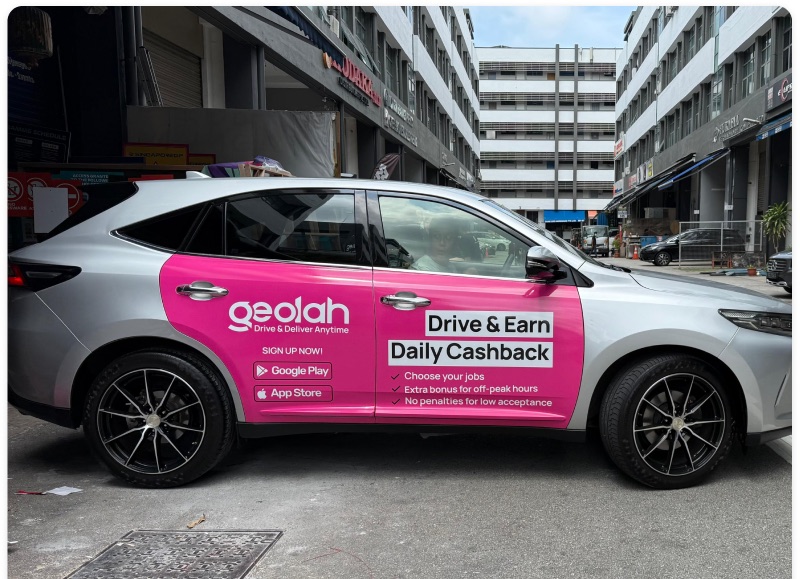
The newest name most Singaporeans have not tried yet, and the one with the most distinctive pricing model: Geolah does not surge. Its fares are calculated on service type, distance and driver availability only, so the price does not jump because it is raining or because you are booking at 6pm, which makes it worth checking precisely at the moments the other apps get expensive. It launched to the public on 17 February 2025 on a provisional licence, and in December 2025 the LTA converted it to a full three-year Ride-hail Service Operator Licence running to 31 December 2027, having built up roughly 5,200 approved private-hire drivers and 40,000 bookings during the provisional period. Off the back of that, Geolah is running 0% driver commission from 1 February to 31 December 2026 alongside passenger discounts, and it has added DBS PayLah! as a payment method. The honest caveat is scale: 5,200 drivers is a fraction of Grab's pool, so availability in outlying areas and at peak is the weak point, and Geolah does not publish a rider platform fee rate card the way Ryde and TADA do, so check the total in-app before confirming. Best for peak-hour and wet-weather trips where everyone else is surging.

No surge pricing: fares are set by service type, distance and driver availability, not demand. 0% driver commission from 1 Feb to 31 Dec 2026, plus passenger discounts. Full LTA licence to 31 Dec 2027. Pays via DBS PayLah!

Get Deal
7
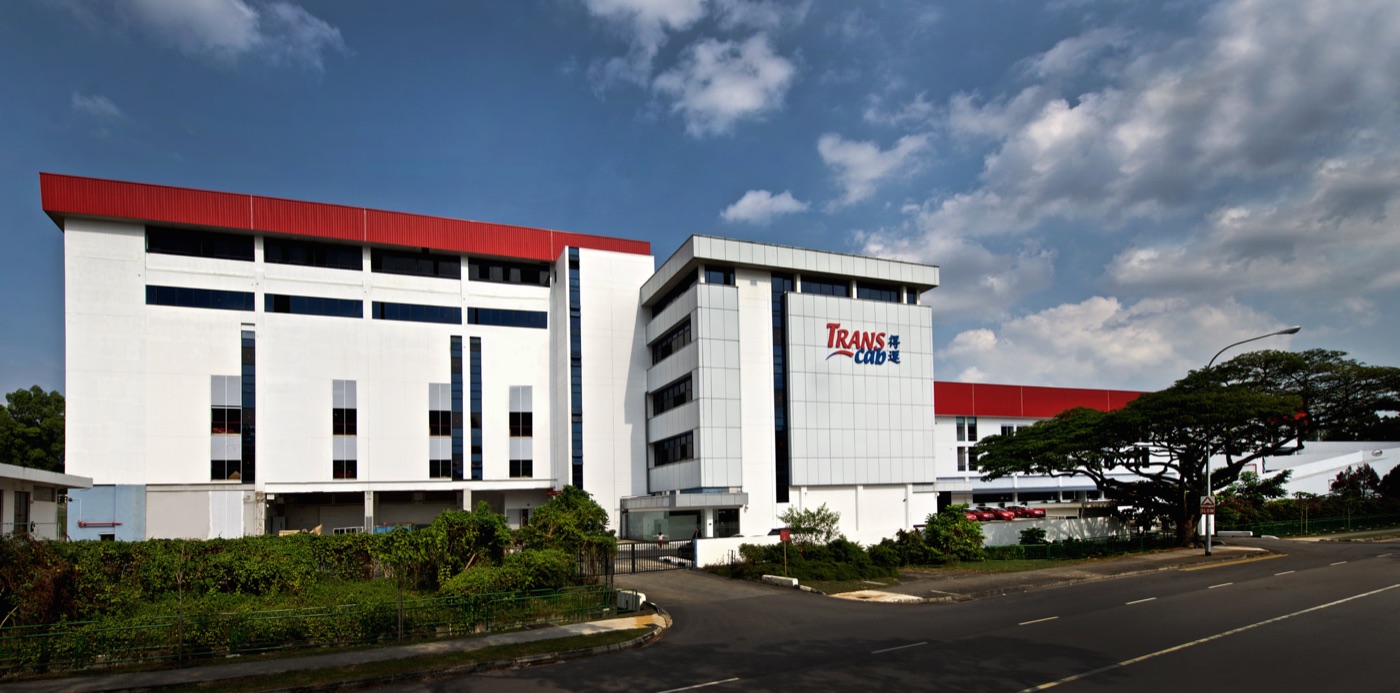
Trans-Cab

Trans-Cab

Singapore's third-largest taxi operator, and the seventh and final holder of a full Ride-hail Service Operator Licence, and the LTA converted its provisional licence to a full three-year one in December 2025, running to 31 December 2027. Its model is the hybrid one: around 2,200 taxi drivers and 300 private-hire drivers on its own app (launched in 2025 and called Smile Ride, which is the name to search for in the app store rather than 'Trans-Cab') out of a total fleet of roughly 2,500 vehicles, with drivers free to switch between app bookings and traditional street hails. Almost every comparison of these apps writes Trans-Cab off as not publishing its fees. It does, in detail, and the numbers are the most interesting on this page. Its Smile Ride platform fee is a ladder rather than a flat rate: S$0.80 on fares under S$10, climbing in 10-cent steps to S$1.50 from S$30, the lowest entry-level platform fee of any operator here. It also runs its own version of the fuel surcharge under a different name, a S$0.60 driver fee introduced on 16 April 2026 and extended to the same 30 September 2026 date as the big four, which its rate card says goes directly to the driver. Together that is a combined fixed charge of S$1.40 to S$2.10, second only to Ryde. Two things pull the other way, and both are easy to miss. Booking a metered Trans-Cab taxi is S$2.30 only off-peak: it is S$3.30 at peak and S$8.00 for an advance booking made at least 30 minutes ahead, rising to S$20 on an Alphard. And every booking paid cashlessly in the Smile app carries a transaction fee of 2.78% plus S$0.15, the largest percentage charge on this list. Flag the same taxi down on the street and you pay the meter with no booking fee and no platform fee, but read on before you reach for a card: Trans-Cab's own fare page adds a 10% administrative charge plus GST to any metered fare paid by credit or charge card, and S$0.30 for NETS, NETS QR or FlashPay. On a S$20 meter the card route costs about S$2.18 extra, more than any platform fee on this page, so cash or NETS is the cheap way to settle a street hail. The meter itself also carries a temporary 1-cent increase per unit distance from 16 April 2026, extended to 30 September 2026. Worth clearing up one thing, because it is still repeated: Grab agreed to buy Trans-Cab in July 2023, but the two called the deal off in July 2024 after Singapore's competition regulator raised concerns, so Trans-Cab remains independent. The app itself is basic next to Grab or Zig, and the private-hire pool is small. Best for street-hailing a metered taxi and skipping booking fees entirely, provided you pay cash or NETS rather than card.

Full LTA ride-hail licence to 31 Dec 2027. It DOES publish a rider rate card, which most comparisons miss: the Smile Ride platform fee climbs from S$0.80 (fare under S$10) to S$1.50 (S$30+), the lowest entry fee here, plus its own S$0.60 driver fee running 16 Apr to 30 Sep 2026, paid straight to the driver. Metered taxi booking fee is S$2.30 off-peak but S$3.30 at peak and S$8.00 booked 30+ min ahead; cashless app bookings add 2.78% + S$0.15. Flag one down instead and there is no booking or platform fee, but paying that metered fare by credit or charge card adds 10% plus GST per Trans-Cab's own fare page (S$0.30 for NETS or FlashPay, nothing for cash). Independent: the Grab acquisition was called off in July 2024

Get Deal

All seven operators holding a full LTA Ride-hail Service Operator Licence, and every charge each adds on top of the fare: the platform fee, the temporary fuel surcharge running to 30 September 2026, and the card charges that four of them bill. Ordered by combined fixed charge, cheapest first; the last column is why that order flips on longer trips. The card column is the one to read twice, because the largest charge in this table is the 10% plus GST that both taxi operators add to a metered fare paid by credit card. Licence status verified against LTA news releases; fees verified against operator rate cards and help centres and Singapore news reports on 3 September 2026.

AppPlatform fee per tripFuel surcharge (to 30 Sep 2026)Cashless transaction feeBest at
RydeS$1.25 (fare ≤S$18) / S$1.47 (above), incl GST, from 17 Feb 2026None, adds no second flat charge1.96% + S$0.24 local Visa/Mastercard; 3.3% + S$0.50 AMEX and foreign cards, +3% more on foreign cards and Alipay0% driver commission. Cheapest fixed charges below a ~S$20 fare; carpooling
Trans-Cab (Smile Ride)S$0.80 (fare <S$10) rising in steps to S$1.50 (S$30+)S$0.60 driver fee, 16 Apr–30 Sep 20262.78% + S$0.15 on every app booking; a metered fare paid by credit/charge card adds 10% + GST, or S$0.30 by NETS/FlashPayLowest entry platform fee; street-hailing a metered taxi and paying cash
CDG ZigS$1.00–S$1.30 incl GST from 1 Jan 2026S$0.50 (fare <S$15) / S$0.80 (S$15+); its own fares page still prints the original 24 Mar–31 Jul windowNone on ComfortRIDE fixed fares; a metered fare paid by credit/charge card, Apple Pay or Google Pay adds 10% + GST, or S$0.30 by PayLah!/NETS/FlashPayMetered taxis and airport runs
TADAS$1.05–S$1.25 before GST, held flat for all of 2026S$0.90 (fare ≤S$18) / S$1.20 (S$18.10+)None published0% driver commission. Lowest platform fee, plus a fee freeze
GrabS$1.20 from 1 Jan 2026 (up from 90¢)S$0.90, but NOT on Standard or metered taxi ridesNone publishedAvailability, coverage and SG–JB cross-border
GojekS$1.10–S$1.70 from Feb 2026 (up 20¢)S$0.90 on all tripsNone publishedLower base fares than Grab
GeolahNot published as a rate cardNone, adds no second flat chargeNone published0% driver commission to 31 Dec 2026. No surge pricing in rain or at peak

What changed in 2026: two fixed charges, not the fare

If your rides feel more expensive this year even when the app shows a similar fare, this is why. There are now two fixed charges stacked on top of the metered or quoted fare, and most people only know about the first one.

1. The platform fee. Every operator charges one, and most raised it at the start of 2026, largely to fund higher CPF contributions for drivers under Singapore's Platform Workers Act.

  • Grab went to S$1.20 per transport ride from 1 January 2026, a 30-cent increase from 90 cents.
  • Gojek raised its fee by 20 cents from February 2026, to a range of S$1.10 to S$1.70 (previously 90 cents to S$1.50).
  • TADA announced on 25 February 2026 that it would hold its fee structure unchanged for all of 2026, the only operator here to publicly commit to that.
  • Ryde raised its fee by 11 cents from 17 February 2026, to S$1.25 on fares of S$18 and below and S$1.47 above that (both including GST), while keeping 0% commission for drivers.
  • CDG Zig charges S$1.00 to S$1.30 including GST from 1 January 2026, varying with distance and travel time.
  • Trans-Cab is the one nobody quotes, and it is the cheapest to start: its Smile Ride app publishes a ladder from S$0.80 on fares under S$10, climbing in 10-cent steps to S$1.50 from S$30.

2. The fuel surcharge, the one that catches people out. In March and April 2026, as pump prices climbed, four operators added a *second* flat charge on top of the platform fee. Grab renamed its existing 50-cent "Driver Fee" to a Fuel Surcharge and raised it to 90 cents from 7 April 2026; Gojek and TADA followed in April, and CDG Zig introduced its version in March. It was due to lapse twice and was extended both times. In late July 2026 the National Private Hire Vehicles Association confirmed all four would keep it until 30 September 2026.

A fifth operator does the same thing without the press release. Trans-Cab's Smile Ride adds a S$0.60 "driver fee", introduced on 16 April 2026 and extended to the same 30 September date, and its taxi meter carries a temporary 1-cent increase per unit distance over the same period. Every list of "apps that don't charge a fuel surcharge" we have seen still includes it.

OperatorFuel surcharge / driver fee per trip
GrabS$0.90, but not on Standard or metered taxi rides
GojekS$0.90 on all trips
TADAS$0.90 on fares up to S$18; S$1.20 from S$18.10
CDG ZigS$0.50 on fares below S$15; S$0.80 from S$15
Trans-Cab (Smile Ride)S$0.60, 16 Apr to 30 Sep 2026

The one genuinely good thing about it: every cent goes to the driver. All four of the big operators pass the surcharge through in full and take no commission on it, and Trans-Cab's own rate card says its fee goes directly to the driver too.

What this means for the comparison. Grab's true fixed cost per trip is not S$1.20. It is S$1.20 plus S$0.90, or S$2.10 before you have travelled a metre, on everything except a Standard or metered taxi ride, where the surcharge does not apply and you pay the S$1.20 alone. Gojek's is S$2.00 to S$2.60. CDG Zig, which looks mid-table on platform fee alone, is S$1.50 to S$2.10. Trans-Cab's Smile Ride starts lowest of all at S$1.40. And Ryde and Geolah, which were not part of the July extension, add no second flat charge at all.

3. The charge that is on nobody's comparison table: the cashless transaction fee. Two operators bill a *percentage* of the transaction for paying by card, and it is large enough to reorder everything above.

  • Ryde charges 1.96% + S$0.24 on local Visa and Mastercard and on Rydecoins, 3.3% + S$0.50 on AMEX, foreign cards and everything else, and a further 3% on top for any foreign card or Alipay.
  • Trans-Cab's Smile Ride charges 2.78% + S$0.15 on every booking made in the app.
  • Both taxi operators charge far more than either of those on a metered fare paid by card. ComfortDelGro and Trans-Cab each add a 10% administrative charge plus GST to a metered taxi fare settled by credit or charge card, and ComfortDelGro applies it to Apple Pay and Google Pay too. PayLah!, NETS, NETS QR and FlashPay are charged a flat S$0.30 instead, and cash is charged nothing. On a S$20 meter the card route costs about S$2.18 extra, which is more than any platform fee on this page. Note that this is a charge on the *metered* fare: a CDG Zig ComfortRIDE fixed fare carries no administrative charge at all.

No equivalent percentage charge appears on the published fee pages of Grab, Gojek, TADA or Geolah. On Ryde it is levied only on cashless payment, so paying cash avoids it entirely, while the platform fee is charged either way.

Do the arithmetic and Ryde's headline advantage turns out to have a ceiling. On a S$12 fare paid by a local card, Ryde's fixed cost is about S$1.73 against Grab's S$2.10, so Ryde wins comfortably. On a S$25 fare, Ryde is about S$2.20 and Grab is still a flat S$2.10, so Grab is now cheaper. The crossover sits at roughly a S$20 fare: below it Ryde is the cheapest app here on fixed charges, above it Grab's flat surcharge and CDG Zig's capped one both undercut it. (The percentage is billed on the transaction, so treat these as close estimates rather than to-the-cent figures.)

On a short trip, this stack is a large share of what you pay, which is why the app with the lowest headline fare is not automatically the cheapest once you reach the payment screen. Always compare the final total, not the fare estimate.

How many ride-hailing apps are there in Singapore?

Seven. Every operator that can legally take a ride booking here holds a Ride-hail Service Operator Licence (RSOL) from the Land Transport Authority, and as of 2026 the full list is:

OperatorLicence status
GrabCar Pte Ltd (Grab)Full RSOL to 31 Dec 2027
Velox Digital Singapore Pte Ltd (Gojek)Full RSOL to 31 Dec 2027
Tada Mobility (Singapore) Pte Ltd (TADA)Full RSOL to 31 Dec 2027
Ryde Technologies Pte Ltd (Ryde)Full RSOL to 31 Dec 2027
CDG Zig Pte Ltd (CDG Zig)Full RSOL to 31 Dec 2027
Geo Lah Pte Ltd (Geolah)Converted from provisional to full, Dec 2025
Trans-cab Services Pte Ltd (Trans-Cab)Converted from provisional to full, Dec 2025

The last two are the change worth knowing about. Geolah and Trans-Cab were awarded one-year provisional licences on 23 December 2024, and in December 2025 the LTA converted both to full three-year licences after they met its regulatory standards. Most "Grab alternatives" lists still stop at five apps. There are seven, and the two newest are the ones actively buying market share with promotions.

One name people still ask about is not on the list: Uber, which sold its Southeast Asian business to Grab in 2018 and has not operated here since. If an app is not in the table above, it cannot legally dispatch a ride in Singapore.

Which apps actually book a metered taxi in Singapore?

If what you want is a taxi rather than a private-hire car, the choice narrows to three of the seven, and it is worth wanting, because a metered fare is set by the meter and the regulated surcharge table rather than by demand, so it does not multiply when it rains.

  • CDG Zig books ComfortDelGro's own Comfort and CityCab taxis on the meter, alongside private-hire cars, buses and Zig Driverless. With the largest taxi fleet in Singapore behind it, it is the most reliable metered booking and the usual pick for an airport run.
  • Grab books metered taxis through GrabCab and its Metered Taxi option, and this is exactly where its fuel surcharge stops. The 90-cent charge applies to all transport bookings *except* Standard and metered taxi rides, so a Grab-booked taxi carries the S$1.20 platform fee and no surcharge.
  • Trans-Cab's Smile Ride dispatches its own red taxis on the meter. Read the booking fee properly before you compare it: the widely quoted S$2.30 is the off-peak rate. It is S$3.30 at peak and S$8.00 for an advance booking made at least 30 minutes ahead, rising to S$20 on an Alphard. Peak here means 6.00–9.29am and 5.00pm to midnight on weekdays, and 10.00am–1.59pm plus 5.00pm to midnight at weekends and on public holidays.

Gojek, TADA and Geolah do not dispatch metered taxis at all. Ryde has taxi driver-partners, but its rider-facing tiers (RydePOOL, RydeFLASH, RydePET and RydeX) are priced as private-hire bookings rather than on the meter.

A street hail is still the cheapest way into a taxi, but only if you pay it the right way. It skips the booking fee and the platform fee, and then both operators' own fare pages add a 10% administrative charge plus GST to any metered fare paid by credit or charge card, ComfortDelGro extending that to Apple Pay and Google Pay. NETS, NETS QR, FlashPay and PayLah! cost a flat S$0.30, and cash costs nothing. So the saving survives if you pay cash or NETS and largely evaporates if you tap a credit card. Two smaller caveats for 2026: the meter itself is not quite where it was, since Trans-Cab's rate card carries a temporary 1-cent increase per unit distance from 16 April 2026 extended to 30 September 2026, and the usual 25% peak and 50% late-night surcharges still apply on top.

New in 2026: booking a ride from Singapore to Johor Bahru

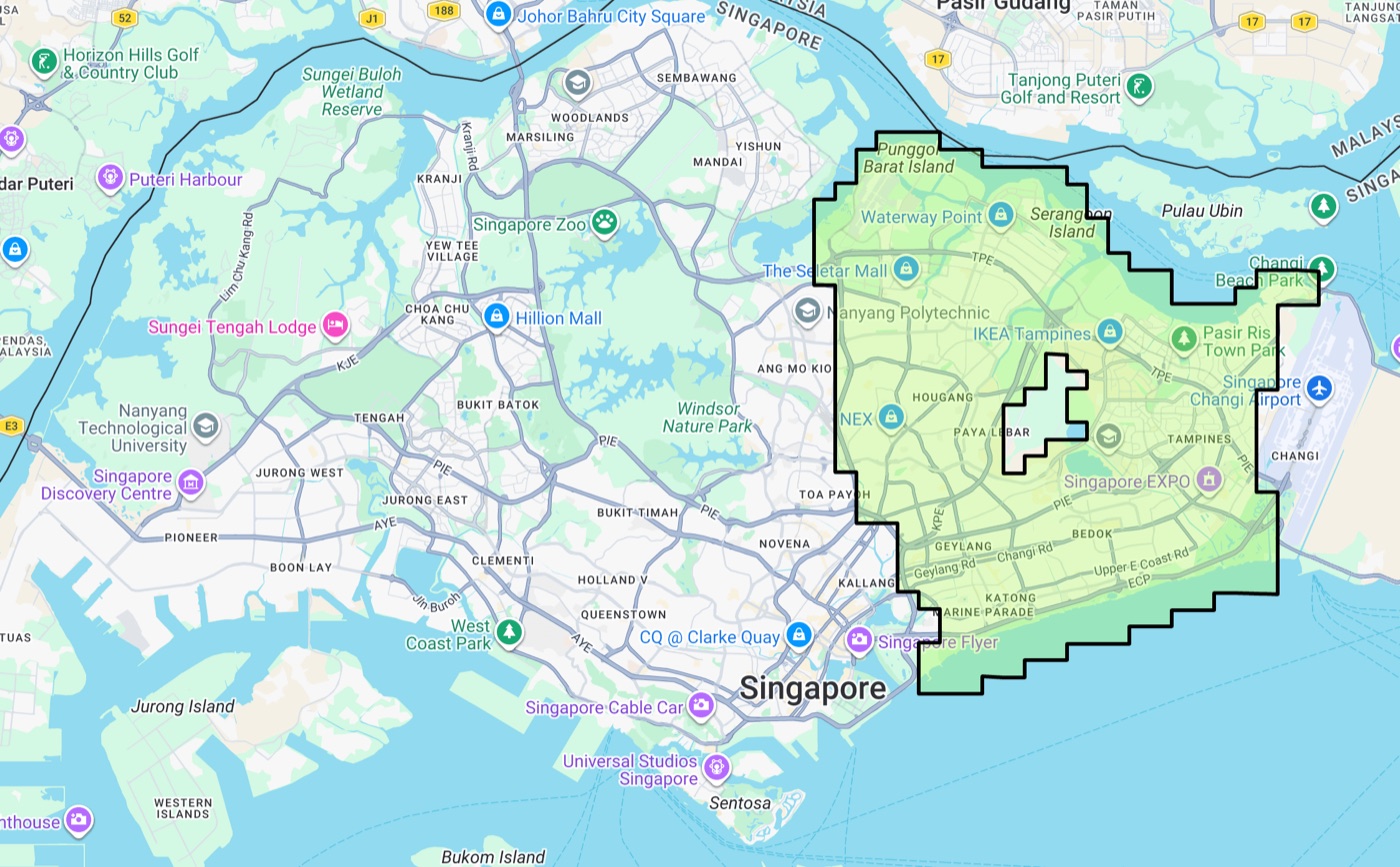
The biggest structural change this year is not a fee. It is a route. In April 2026 the LTA awarded GrabCar Pte Ltd Singapore's first Cross-border Ride-hail Service Operator Licence (CRSOL), valid for three years from 30 April 2026, and Grab began rolling out the pilot service, Cross-Border SG-JB (Beta), on 4 May 2026. It is the first time you can book a cross-border car door-to-door in a ride-hailing app rather than arranging a private cross-border taxi.

How it works in practice:

  • Coverage: anywhere in Singapore, and in Malaysia the zones of Johor Bahru, Iskandar Puteri, Forest City, Kulai and Senai.
  • Fares are fixed upfront at the point of booking, not metered. The service launched with an introductory discount of up to 20%, which Grab raised to 30% for the June school holidays from 29 May to 28 June 2026; that window has closed and Grab has not published a current level, so check the quote in-app rather than assuming one.
  • Book 6 hours to 7 days ahead. Grab cut the minimum from 12 hours to 6 on 29 May 2026, and now sends a push notification prompting you to book the return leg as soon as the outbound is confirmed. It is still a scheduled service, not an on-demand one.
  • 4-seater and 6-seater vehicles, including Premium models.
  • The catch is the return leg, and it is only the pickup. From 5 May 2026 the scheme was relaxed so that *drop-offs* can be anywhere in Singapore and anywhere across the five Johor zones, rather than terminal-to-terminal as originally planned. *Pickups* by a foreign-licensed taxi remain restricted to government-designated points: Toppen Shopping Centre, Midvalley Southkey Mall, Angsana Mall and Larkin Sentral Terminal in Malaysia, and near VivoCity, Century Square, Joo Koon MRT and Ban San Street Terminal in Singapore. So you can be set down at your door, but you cannot be collected from it on the return leg.

Cross-border cars carry a roof-top sign and a cross-border identification decal, and drivers hold licences on both sides. If you are heading to JB for the weekend, this is now worth pricing against the coach and the causeway taxi queue.

How to actually save on every ride

  1. Compare the final total, not the fare estimate. The platform fee, the fuel surcharge and GST are all added on top. Two apps quoting the same fare can differ by more than a dollar once you reach the payment screen.
  2. Count every fixed charge, not just the platform fee. Through 30 September 2026 the combined figure is what matters: Ryde S$1.25–S$1.47, Trans-Cab's Smile Ride S$1.40–S$2.10, CDG Zig S$1.50–S$2.10, TADA about S$1.95–S$2.45, Grab a flat S$2.10 and Gojek S$2.00–S$2.60. Ranking the apps on platform fee alone gets this backwards.
  3. Short trips reward the low-fee apps most. A S$2.10 fixed charge is 30% of a S$7 hop but under 7% of a S$32 airport run, so for quick trips Ryde and CDG Zig have a real structural edge.
  4. Keep two apps installed. Availability, not price, is what strands you in the rain. Grab and CDG Zig have the deepest fleets; TADA and Ryde are usually cheaper when a car is nearby.
  5. Check Geolah when it rains. It is the one operator that does not surge, so its relative advantage is biggest at exactly the moments every other app gets expensive.
  6. Check your GrabCoins expiry. The first deadline has passed, with the earliest converted balances expiring on 31 July 2026, but coins still lapse six months after you earn them, so spend rather than hoard.
  7. Consider the meter, and pay it in cash. When traffic is light and nothing is surging, a street-hail metered taxi (a Trans-Cab or a ComfortDelGro) skips the booking fee and the platform fee. Do not settle it with a credit card, though: both operators add 10% plus GST to a metered fare paid by card, which is about S$2.18 on a S$20 meter. NETS or PayLah! costs a flat S$0.30, and cash costs nothing.
  8. Pay cash on Ryde, and watch the fare size. Its 1.96% + S$0.24 transaction fee is charged on cashless payment only, while the platform fee applies either way. Because it is a percentage, Ryde is the cheapest app on fixed charges below roughly a S$20 fare and not above it, so on a long airport run check Grab's flat S$2.10 and CDG Zig's capped charge before you book.
  9. Book a taxi through Grab if you want one. Its 90-cent fuel surcharge does not apply to Standard or metered taxi rides, so a Grab-booked taxi costs the S$1.20 platform fee and nothing on top.

Related reads

*Licence status was verified against Land Transport Authority news releases. Platform fees, fuel surcharges, card and transaction fees, taxi booking fees, commission rates, cross-border service terms and loyalty terms were verified against operator pages and rate cards on 3 September 2026, including ComfortDelGro's published taxi fares page, Trans-Cab's Smile Ride and taxi fare tables, Gojek's own blog posts on GoCar Nearby (2 September 2026), the Zig by ComfortDelGro dispatch partnership (27 August 2026), yuu Points and current promo codes, and Ryde's Ryde+ subscription pages, alongside Singapore news reports. Two dates are worth watching. The fuel surcharge is a temporary measure that has already been extended twice and is confirmed only to 30 September 2026, with no operator saying what happens after that. And ComfortDelGro's own fares page still prints the original 24 March to 31 July 2026 window for its driver fee even though the National Private Hire Vehicles Association said in July that it would run to 30 September, so check your in-app fare breakdown. Geolah does not publish a rider platform fee rate card; Trans-Cab does, on its own site, and it is the one most comparisons of these apps miss. Fares vary with demand, time of day and pickup location, so always check the final total in-app before confirming a booking.*


Frequently Asked Questions

Which ride-hailing app is cheapest in Singapore in 2026?

There is no single app that wins every trip, because fares move with demand, but the fixed part of the bill can be ranked, and you have to count both charges to do it properly. Add the platform fee and the fuel surcharge together and the picture through 30 September 2026 is: Ryde cheapest at S$1.25 to S$1.47 including GST, because it charges no fuel surcharge at all; then Trans-Cab's Smile Ride at S$1.40 to S$2.10; then CDG Zig at S$1.50 to S$2.10; then TADA at roughly S$1.95 to S$2.45; then Grab at a flat S$2.10; and Gojek most expensive at S$2.00 to S$2.60. That reverses the ranking you get from platform fees alone, where Grab's S$1.20 looks mid-table and CDG Zig looks unremarkable. Then there is the charge almost nobody adds in. Ryde and Trans-Cab are the only two operators here that bill a cashless transaction fee, 1.96% plus S$0.24 on Ryde for a local Visa or Mastercard and 2.78% plus S$0.15 on Trans-Cab's app, and because it is a percentage it grows with the fare. On a S$12 card ride Ryde is about S$1.73 against Grab's S$2.10; on a S$25 ride Ryde is about S$2.20 and Grab is still S$2.10. So the honest answer is that Ryde is cheapest below roughly a S$20 fare and Grab's flat charge or CDG Zig's capped one wins above it, unless you pay Ryde in cash, which avoids the transaction fee entirely. Geolah does not publish a rider fee rate card at all, though its no-surge pricing can win outright when everyone else is multiplying. The practical answer: open two apps, compare the final total rather than the fare estimate, and remember the cheapest quote often changes by time of day and pickup location.

What is a platform fee, and why did it go up in 2026?

A platform fee is a flat charge the app adds on top of your fare. It is not the driver's earnings and it is not a surge multiplier. Most Singapore operators raised theirs at the start of 2026, and Grab explicitly attributed its 30-cent increase to higher mandatory CPF contributions for drivers under Singapore's Platform Workers Act, which extends CPF and injury coverage to platform workers. Because the fee is flat rather than proportional, it hurts short trips most: S$1.20 on a S$7 ride is over 17% of the fare, but under 4% on a S$32 airport run. If most of your trips are short hops, the fee difference between apps matters more than the per-kilometre rate.

What is the fuel surcharge on my ride, and when does it end?

It is a second flat charge, separate from the platform fee, that four operators added in March and April 2026 when pump prices climbed, with 95-octane petrol going from about S$2.87 a litre to around S$3.36. Grab renamed its existing 50-cent Driver Fee to a Fuel Surcharge and raised it to 90 cents from 7 April 2026; Gojek and TADA introduced theirs in April and CDG Zig in March. The current amounts are 90 cents on Grab and Gojek, 90 cents on TADA for fares up to S$18 and S$1.20 from S$18.10, and 50 cents on CDG Zig for fares below S$15 and 80 cents from S$15. It was originally meant to lapse at the end of May 2026, was extended to 31 July, and in late July the National Private Hire Vehicles Association confirmed all four operators would hold it until 30 September 2026. Whether it continues past that date has not been announced, so check the fare breakdown in your app. Two things worth knowing. First, every cent goes to the driver: none of the four takes commission on it. Second, the list of operators that do not charge it is shorter than it looks: Ryde and Geolah genuinely add nothing, but Trans-Cab, which was not in the announcement either, runs the same measure under its own name. Its Smile Ride app charges a S$0.60 driver fee introduced on 16 April 2026 and extended to the same 30 September 2026 date, and its taxi meter carries a temporary 1-cent increase per unit distance over the same period. One more exception is worth reading precisely: Grab's 90 cents applies to all transport bookings except Standard and metered taxi rides, so a taxi booked through Grab pays the S$1.20 platform fee and no surcharge.

Is Gojek still operating in Singapore?

Yes. Gojek exited Vietnam in 2024 and there was press speculation around 2023 to 2024 that Singapore could follow, but that did not happen. Gojek is still actively operating here in 2026 and rolled out a fuel support package for its Singapore driver-partners in April 2026. It also adjusted its Singapore platform fee in February 2026, which is not something an operator on the way out does. The full ride line-up including GoCar, GoCar Flash, GoCar XL, GoCar Premium, GoCar Kids and GoTaxi remains bookable, and it added GoCar Nearby on 2 September 2026, a flat fare capped at S$9.90 for trips under 5km booked between 10am and 5pm with both ends inside the East and North-East regions. From 27 August 2026 it also routes GoTaxi requests to Zig by ComfortDelGro, so a GoTaxi may arrive as a ComfortDelGro cab.

What happened to my GrabRewards points?

GrabRewards was replaced by GrabCoins in November 2025. Existing points were converted one-for-one, so a 2,000-point balance became 2,000 GrabCoins, and membership tiers were scrapped from January 2026 in favour of a single currency you can spend immediately. The important change is expiry: GrabCoins lapse six months after you earn them, and that first deadline has now passed: the earliest converted balances expired on 31 July 2026, so if you had not opened the app since January, those coins are gone. The rolling six-month rule still applies to everything you have earned since, so check the expiry dates on your current balance in the app. GrabCoins redeem at roughly 50 coins to S$0.10, which makes them worth spending rather than hoarding.

Is a street-hail taxi ever cheaper than booking through an app?

Sometimes, yes, but it depends on how you pay. Flagging down a metered ComfortDelGro or Trans-Cab taxi skips the booking and platform fee entirely, and the meter is not adjusted for demand the way a dynamic app fare is. The catch almost nobody mentions is the card charge: both operators' own fare pages add a 10% administrative charge plus GST to a metered fare paid by credit or charge card, and ComfortDelGro applies it to Apple Pay and Google Pay as well. On a S$20 meter that is roughly S$2.18, more than the booking and platform fees you just saved. NETS, NETS QR, FlashPay and PayLah! cost a flat S$0.30, and cash costs nothing, so pay one of those and the street hail keeps its edge when traffic is light and nothing is surging. The other trade-offs are the obvious ones: you cannot see the price before you commit, availability is unpredictable in the rain or at peak, and taxi surcharges for peak periods, the CBD and airport trips still apply. For a planned airport run or a rainy evening, the app is usually still the better bet.

Which app is best for booking a taxi in Singapore?

Only three of the seven dispatch metered taxis, and the difference matters, because a metered fare is set by the meter and the regulated surcharge table rather than by demand, so it does not multiply when it rains. CDG Zig books ComfortDelGro's own Comfort and CityCab taxis and has the largest taxi fleet in Singapore behind it, which makes it the most reliable metered booking and the usual choice for an airport run. Grab books taxis through GrabCab and its Metered Taxi option, and this is exactly where its fuel surcharge stops: the 90 cents applies to everything except Standard and metered taxi rides, so a Grab-booked taxi carries the S$1.20 platform fee alone. Trans-Cab's Smile Ride dispatches its own red taxis; read its booking fee properly before comparing, because the widely quoted S$2.30 is the off-peak rate. It is S$3.30 at peak and S$8.00 for an advance booking made at least 30 minutes ahead. Gojek, TADA and Geolah do not dispatch metered taxis at all, and Ryde's rider-facing tiers are priced as private-hire bookings. Cheapest of all is still the taxi you flag down, with one condition on how you pay: a street hail carries no booking fee and no platform fee, but both ComfortDelGro and Trans-Cab add 10% plus GST to a metered fare settled by credit or charge card. Pay cash, or NETS or PayLah! at a flat S$0.30, and the saving holds.

Is there Uber in Singapore?

No. Uber sold its entire Southeast Asian business to Grab in 2018 and has not operated in Singapore since. If you open the Uber app here it will not dispatch a ride. Visitors often assume it works because Uber is available in most other major cities, so it is worth installing an alternative before you land. Grab is the closest equivalent in coverage and is the one most visitors default to; CDG Zig is the better choice if you want a metered taxi with a predictable fare, and it also books the airport run. All seven licensed operators accept overseas-issued credit cards, and Grab and CDG Zig both have English-language interfaces and airport pickup points signposted at Changi.

Is GrabShare still available in Singapore in 2026?

Yes, but under a different name. Grab's carpooling products are now listed in the app as Saver | Share and Saver | Hitch rather than the old GrabShare and GrabHitch branding, and both are still bookable in Singapore in 2026. Saver | Share matches you with another passenger heading a similar way and splits the cost, which suits short to medium trips where you do not mind a detour; Saver | Hitch is the social carpooling option with a driver already making that journey, which needs to be booked ahead and works better on longer or non-urgent trips. If you carpool regularly on a fixed route, compare against Ryde, whose carpooling product is its most distinctive offering and is built around exactly that use case.

#ride hailing apps singapore#best ride hailing app singapore 2026#grab vs gojek singapore#cheapest ride hailing app singapore#grab competitors in singapore#grab alternative singapore#grab fuel surcharge singapore#grab platform fee 2026#ride hailing singapore#tada singapore#ryde singapore#cdg zig singapore#geolah singapore#trans-cab singapore#smile ride singapore#is there uber in singapore#grabshare singapore#grab promo code singapore#gojek promo singapore#ride hailing comparison singapore#singapore taxi app#best taxi app singapore#ride sharing singapore#ryde transaction fee

You Might Also Like