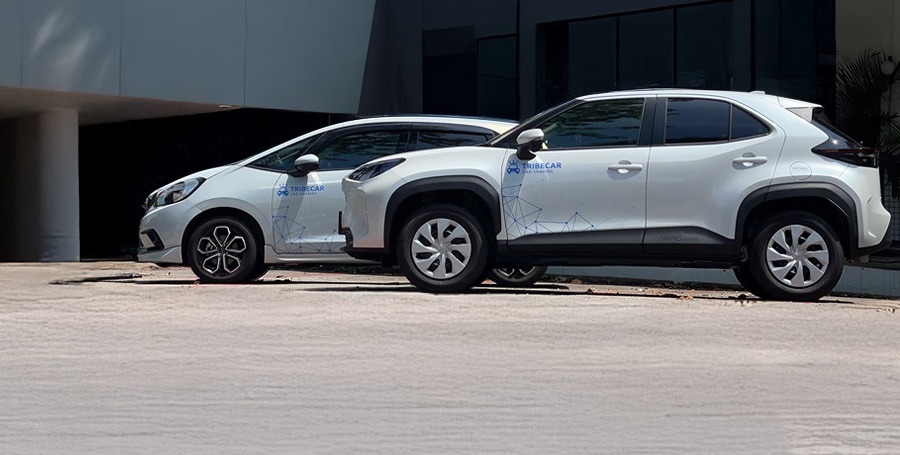
Owning a car in Singapore means paying for a COE on top of everything else, but you don't have to own to drive. We price 7 options against the rates each provider published in September 2026: Tribecar's cheapest hour ($2.18), GetGo's $70 weekday full day, Bolt's leases from $1,700 a month and the three driving centres, where BBDC has the cheapest lesson at $77.39 off-peak. Plus the two costs nobody quotes a new driver: Tribecar's 30% surcharge and GetGo's $11,000 insurance excess.
The 4 driving models at a glance
| Model | How it works | Best for |
|---|
| Car-sharing (Tribecar, GetGo, Car Club) | Book in the app, pick up and return to a pod; petrol and insurance bundled; pay per hour plus per km | Occasional drivers, a few times a month |
| Short-term rental (Hertz, Sixt) | Daily or weekly hire; you pay petrol and ERP; flexible pick-up including Changi | Multi-day trips, airport runs, visitors |
| Long-term leasing | Fixed monthly all-in (car, insurance, road tax, servicing); 1 to 3 years; no COE | Regular drivers who don't want ownership cost |
| Getting your licence (CDC, BBDC, SSDC, PDI) | Basic Theory Test, Final Theory Test, practical lessons, Traffic Police practical test | First-time licence seekers |
> All figures below were verified against each provider's own published rate card in September 2026 and re-checked on 19 October 2026. Tribecar, GetGo, Bolt, Wearnes, CDC and SSDC all held to the cent; BBDC's site now sits behind a security check, so its fees are as read in September. Rates change; confirm with the provider, the Traffic Police and LTA before committing.
Car-sharing: the two rate cards, side by side
The headline hourly rate is the least useful number on either site, because both platforms price by time band and both add charges the banner leaves out.
| Tribecar (Economy) | GetGo (Economy) |
|---|
| Cheapest hour | $2.18 (Super Off-Peak, 1am to 7am weekdays) | $3 (off-peak, 6am to 9am daily) |
| Daytime weekday | $4.91 (7am to 5pm) | $5 (normal, 9am to 6pm) |
| Evening weekday | $8.18 (5pm to 1am) | $9 (peak, 6pm to 9pm), then $5 after 9pm Mon to Thu |
| Weekend | All hours charged at peak, $8.18 | $9 peak from 9am to midnight, $3 from 6am to 9am |
| Mileage | $0.43/km | $0.44/km petrol, $0.29/km electric |
| Booking fee | None, but surge or weekend surcharge of $0.55 to $3.27/hr can apply | $1.20 platform fee per booking |
| Full day | $76.30 weekday, $119.90 weekend, $545/week | $70 Mon to Thu, $80 Fri, $90 Sat and Sun |
| New driver | +30% surcharge on the whole booking | Higher insurance excess band |
Two practical readings. First, Tribecar wins the hour and GetGo wins the day. If your trip is a two-hour weekday-daytime errand, Tribecar's $4.91 beats GetGo's $5 plus platform fee; if it is a full Monday, GetGo's $70 is $6.30 below Tribecar's $76.30, and at the weekend the gap widens to $29.90. Second, there is no cheap weekend at Tribecar, because every weekend and public holiday hour is billed at the peak rate. GetGo's cheap window is narrow too: its $3 off-peak hour exists only between 6am and 9am.
Tribecar is also beta-testing FlexiFuel, which changes what "petrol included" means. You choose either Pay Your Own Fuel, where you return the car at the level you started with and pay no mileage charge, or Mileage Charge, where fuel is bundled into the $0.43/km, you use the card in the car, and you return it with at least 25% in the tank. The hourly rate is the same either way.
Just passed your test? Read this before your first booking
Both platforms treat a driver with under two years of experience as a separate risk class, and they price it in opposite ways.
Tribecar charges you more up front. Its published card applies a mandatory New Driver surcharge of 30% on the booking amount if you are under 23 or have less than 2 years of driving experience. A weekday off-peak Economy car goes from $4.91/hr to $6.38/hr, and a $76.30 full day becomes $99.19.
GetGo charges you more if something goes wrong. It classifies drivers under 23, aged 70 or over, or with under 2 years of experience as young, inexperienced and elderly (YIED), and prices that into the insurance excess rather than the hourly rate:
| Driver | Vehicle | No CDW | Standard CDW | Enhanced CDW |
|---|
| Young / inexperienced / elderly | Most categories | $11,000 | $5,500 | $4,500 |
| Young / inexperienced / elderly | Luxury, Plus Electric | $16,500 | not published | not published |
| Experienced (23 to 69, 2+ years) | Select | $6,600 | not published | capped at $900 |
Take the Collision Damage Waiver. It cannot be added once a booking is confirmed, so the decision has to be made before you tap confirm.
Short-term rental: the multi-day sweet spot
Once a booking runs past roughly 8 to 10 hours, a flat day rate beats the meter. The difference from car-sharing is that you pay petrol and ERP yourself, you can collect from an airport counter, and cross-border driving into Malaysia may be permitted (confirm the terms in writing, and check the car is VEP-registered). GetGo's Drive to Malaysia bookings (from 1 September 2026) are the counter-free alternative: a 12-hour minimum, a 30% surcharge capped at $20 to $35 a day, no mileage charge, and your own fuel.
What a day actually costs. Hertz and Sixt quote on demand rather than publishing a card, so the usable published benchmark is the sharing platforms' full-day pricing: GetGo at $70/day Mon to Thu, $80 on a Friday or eve of a public holiday, $90 Sat and Sun and up to $100 on a public holiday, with mileage at $0.44/km on top. Tribecar's equivalent is $76.30 weekday and $119.90 weekend. For a trip that starts across the border, Tribecar also rents Economy sedans picked up in Johor Bahru at $50 a weekday and $80 at the weekend, and in Penang, where the same car is currently marked down to $25 and $40. Treat $70 to $90 as your floor: if a counter quote lands well above it and you don't specifically need the airport, a bigger vehicle class or written cross-border permission, a full-day sharing booking usually wins.
Long-term leasing: someone finally published a price list
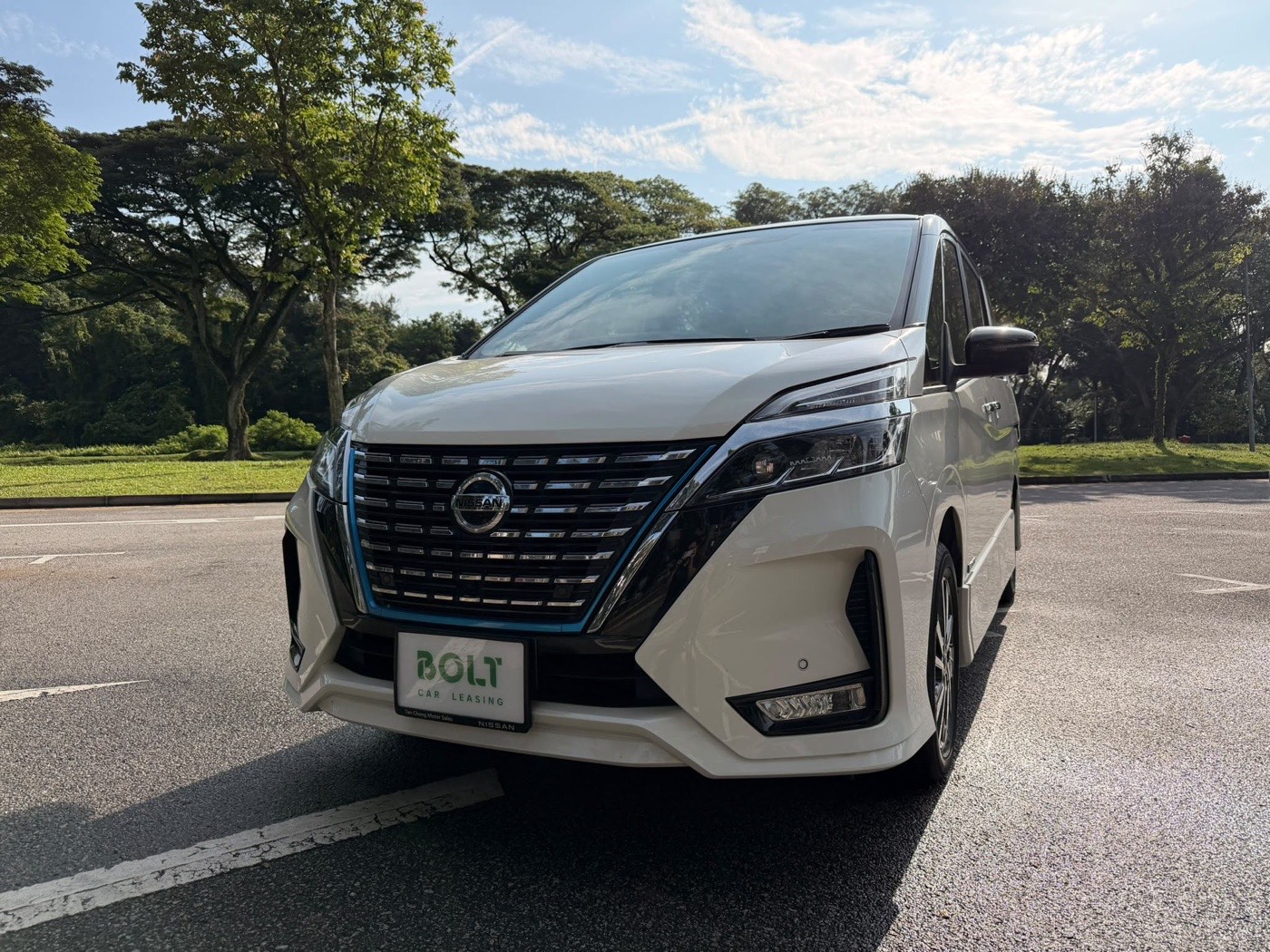
This market has been quote-only for years, which is why most guides give you a vague band. That changed. Bolt Car Leasing now lists cars model by model:
| Vehicle | Monthly, all-in |
|---|
| Hyundai Avante 1.6 (2022) | $1,700 |
| Mazda 6 (2021) | $1,800 |
| Toyota Altis (2024) | $1,900 |
| Toyota Previa Aeras 2.4A (2018) | $2,250 |
| BMW 216i Gran Coupe (2022) | $2,400 |
| Aion V Electric (2026) | $2,500 |
| GAC E9 Plug-in Hybrid (2026) | $4,500 |
| Mercedes-Benz E200 Mild Hybrid (2026) | $4,800 |
Its stated floor is $1,500 a month, and packages include comprehensive insurance, unlimited mileage, road tax, servicing and 24/7 roadside assistance, with sedans VEP-ready for Malaysia. A minimum 2-year contract earns a $200 voucher per car. Wearnes Leasing publishes a starting rate of $2,188 a month across its in-house marques. Goldbell remains enquiry-only for long-term passenger leases.
What that list tells you: model year moves the monthly figure more than the badge does. A 2022 entry-level BMW leases for $2,400, well under the $3,500-plus most guides quote for a German marque, while a 2026 plug-in hybrid MPV runs $4,500. Price any quote against Bolt's published card before you accept it, and get three quotes on the same model and the same contract length. Stretching from a 12-month to a 36-month commitment commonly cuts the monthly rate by around 10 to 20%.
Two things to read closely: the mileage cap (Bolt advertises unlimited, but that is a differentiator, not the norm) and the early-exit penalty.
Which driving centre is cheapest?
All three teach the same syllabus to the same Traffic Police test, but they price every stage differently.
| Item | CDC (Ubi) | BBDC (Bukit Batok) | SSDC (Woodlands) |
|---|
| Enrolment, 1-year membership | $185.30 (theory lessons included) | $106.82 (+$3 online fee) | $130.80 |
| Theory lesson, 100 min | Included above | $19.62 | $21.80 |
| Practical lesson, off-peak | $79.57 | $77.39 | $82.84 |
| Practical lesson, peak | $89.38 | $86.11 | $91.56 |
| Weekday off-peak window | 8.30 to 10.10am, 12.45 to 4.15pm | See centre | 8am to 3.45pm |
| Fixed-instructor add-on | +$13.08 (One Team), +$16.35 (Elite) | Fixed group scheme | +$13.08 |
| Practical test day, all-in | $360.13 | $336.15 | $326.34 |
| Membership extension | $65.40 / 6 months | $9.81 / month, auto-renewed | $67.58 / 6 months |
| Published lesson average | 24 auto, 29 manual | Not published | 20 to 25 |
The enrolment gap is an illusion. CDC's $185.30 looks $78 dearer than BBDC's $106.82, but CDC includes theory lessons, eLearning and eTrial tests in that fee while BBDC bills its four compulsory theory lessons separately at $19.62 each. Add them and BBDC comes to exactly $185.30, to the cent.
Lessons decide the winner, not test day. SSDC has the cheapest test day at $326.34 and BBDC the cheapest lessons, but you sit 20 to 29 lessons and only one test. On 24 off-peak lessons plus one test day, BBDC comes to about $2,193, CDC to about $2,270 and SSDC to about $2,315, so BBDC lands roughly $76 below CDC and $155 below SSDC.
The surcharge most guides miss. Those are standard-scheme prices with no fixed instructor. At CDC, One Team adds $13.08 a lesson and Elite Team $16.35, and learning through the Kovan or Tampines pick-up points adds $15.26 a lesson, about $366 over 24 lessons. Those pick-up points come with a higher booking cap (8 lessons a month against Ubi's 5), so you are buying speed, not convenience alone. SSDC's fixed instructor is $13.08 a lesson.
Off-peak is defined very differently. SSDC's off-peak covers all weekday slots from 8am to 3.45pm, a single wide window. CDC splits its off-peak into 8.30 to 10.10am and 12.45 to 4.15pm, with 10.20am to noon and 4.25 to 10.20pm at peak. All weekend and public holiday slots are peak everywhere. Booking off-peak saves $8.72 to $9.81 a lesson, roughly $200 to $240 across a course.
What changed in 2026
Two separate increases landed this year, so any figure from 2025 or earlier is now too low.
Traffic Police test fees rose on 13 March 2026, the first revision since 2016, phased over three years:
| Test | Before | From 13 Mar 2026 | From Mar 2027 | From Mar 2028 |
|---|
| Theory tests (BTT, FTT, RTT) | $6.50 | $7.20 | $8.00 | no further rise |
| Practical Driving Test | $33.00 | $40.00 | $45.00 | $50.00 |
Driving centres raised learner fees from 1 January 2026: CDC's peak practical lesson went up about 9.3% from $81.75 to $89.38, BBDC's about 6.8% from $80.66 to $86.11, and SSDC's simulator session about 25% to $30.52.
The fees the lesson price hides
Budget for lessons and the $40 test fee alone and you will be short by roughly $550. From CDC's published Class 3/3A table (all fees include GST):
| Item | Fee |
|---|
| Enrolment, Standard (1-year membership) | $185.30 |
| Enrolment, One Team / Elite Team | $201.65 |
| Refundable deposit | $10.00 |
| Membership renewal (6-month extension) | $65.40 |
| Eyesight test + digital photograph | $1.96 + $7.09 |
| Induction programme (50 min) | $23.98 |
| Simulator course | $30.30 per module, 3 modules |
| Internal Evaluation | $6.54 to $7.63 per session |
| Vehicular pre-operative check | $23.98 off-peak, $28.34 peak |
| Learner Driver Competency Screening | $59.95 off-peak, $64.31 peak |
| Pre-Practical Test Enhancement Practice (optional) | $54.50 to $58.86 |
| Theory test (BTT or FTT), each | $7.20 + $2.94 admin |
| Practical test day, all-in | $360.13 |
That last line is the one most cost guides miss. The Traffic Police charges $40 for the practical test, but CDC bills $317.19 for the test vehicle and warm-up on top of it, plus $2.94 admin. A failed attempt therefore costs about $360 to repeat, not $40, and two or three extra lessons at around $80 before you book are usually the cheaper bet. BBDC splits the same day into $250.70 vehicle rental plus a $42.51 warm-up ($336.15 all-in) and SSDC into $239.80 plus $43.60 ($326.34).
All-in cost (2026): roughly $2,500 to $4,000+ at a driving centre for Class 3A; Class 3 runs higher on more lessons. Worked from CDC's own price list, booking off-peak: $185.30 enrolment + $10 deposit + $1.96 eyesight test + $7.09 photo + $23.98 induction + 24 lessons at $79.57 ($1,909.68) + 3 simulator modules ($90.90) + $23.98 pre-operative check + $59.95 competency screening + 2 theory tests ($20.28) + $360.13 test day, which comes to about $2,700. Book those same 24 lessons at peak instead and you add about $235.
One discount worth knowing about
Both CDC and SSDC state that UTAP funding is available for Class 3 only. NTUC members taking the manual course can claim course support fees that Class 3A learners cannot, which is worth weighing before you default to auto. Check the current criteria on the union's site before enrolling.
How long it takes is the bigger constraint
CDC's published averages are 24 practical sessions for Class 3A and 29 for Class 3 (including 2 automatic lessons), and Ubi caps you at 5 practical bookings a month, 8 through the Kovan and Tampines pick-up points. At 5 a month, 24 lessons is about five months of practical training on its own, which is why a manual learner should expect at least one $65.40 membership extension along the way. SSDC publishes a lower average of 20 to 25 sessions. A private instructor has no monthly cap, and that, more than teaching style, is why some learners finish sooner.
Two timing traps at the theory stage: at CDC you must pass an in-house Internal Evaluation before you may book the real test, and at SSDC you must pass the Theory Trial Test in test mode first, with that pass valid for only 30 days. SSDC also warns that a theory retest alone can mean a two-month wait.
The checklist before you sign anything
For car-sharing:
- A pod within walking distance of where you start
- Which time band your booking actually falls in
- Insurance excess, and whether to take the CDW (it cannot be added later)
- The extras: platform fee, per-km rate, surge or weekend surcharge
- The fuel policy, and what you owe if you return the car low
- Minimum age and years licensed, which trigger surcharges and excess bands
For leasing:
- Exactly what the monthly fee includes
- The mileage cap and the excess-mileage rate
- Early-termination penalty
- Vehicle condition standards on return
- Renewal and end-of-contract terms
For driving schools and private instructors:
- Slot waiting times at all three centres, checked before you commit
- Whether you are being quoted a standard or fixed-instructor lesson
- For a PDI: a valid Traffic Police instructor licence and a dual-control car
- Auto (3A) versus manual (3), remembering that only Class 3 attracts UTAP funding
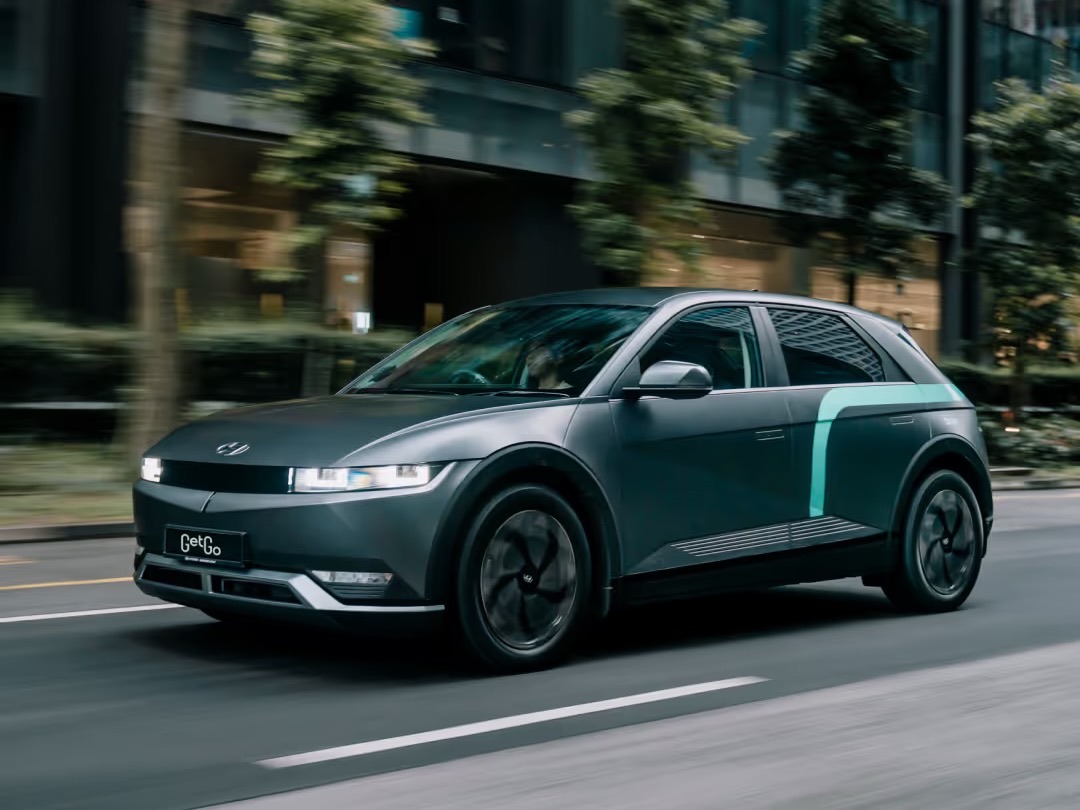
*Cover image: GetGo's own Hyundai Ioniq 5 fleet image, from its official site. Provider descriptions are positioning to start a shortlist, not endorsements. All rates were taken from each provider's published card in September 2026 and re-checked on 19 October 2026; confirm current fees, terms and availability directly with each provider and on the Traffic Police and LTA official websites before committing.*
Related reads