5 Best Crypto Exchanges in Singapore (2026): the Full MAS-Approved List of 38, and What Coinhako, Independent Reserve, Crypto.com, Coinbase & Bitstamp Really Cost
Deals

5 Best Crypto Exchanges in Singapore (2026): the Full MAS-Approved List of 38, and What Coinhako, Independent Reserve, Crypto.com, Coinbase & Bitstamp Really Cost

There is no such thing as a 'crypto exchange licence' in Singapore. What exists is a Major Payment Institution licence carrying the Digital Payment Token activity, and exactly 38 entities hold it. We list all 38, then price the five most-used ones straight off their own September 2026 fee pages, including the spread that the one-tap buy button quietly adds on top of the advertised percentage.

Marcus Wong12 May 20268 min readUpdated 7 Sept 2026

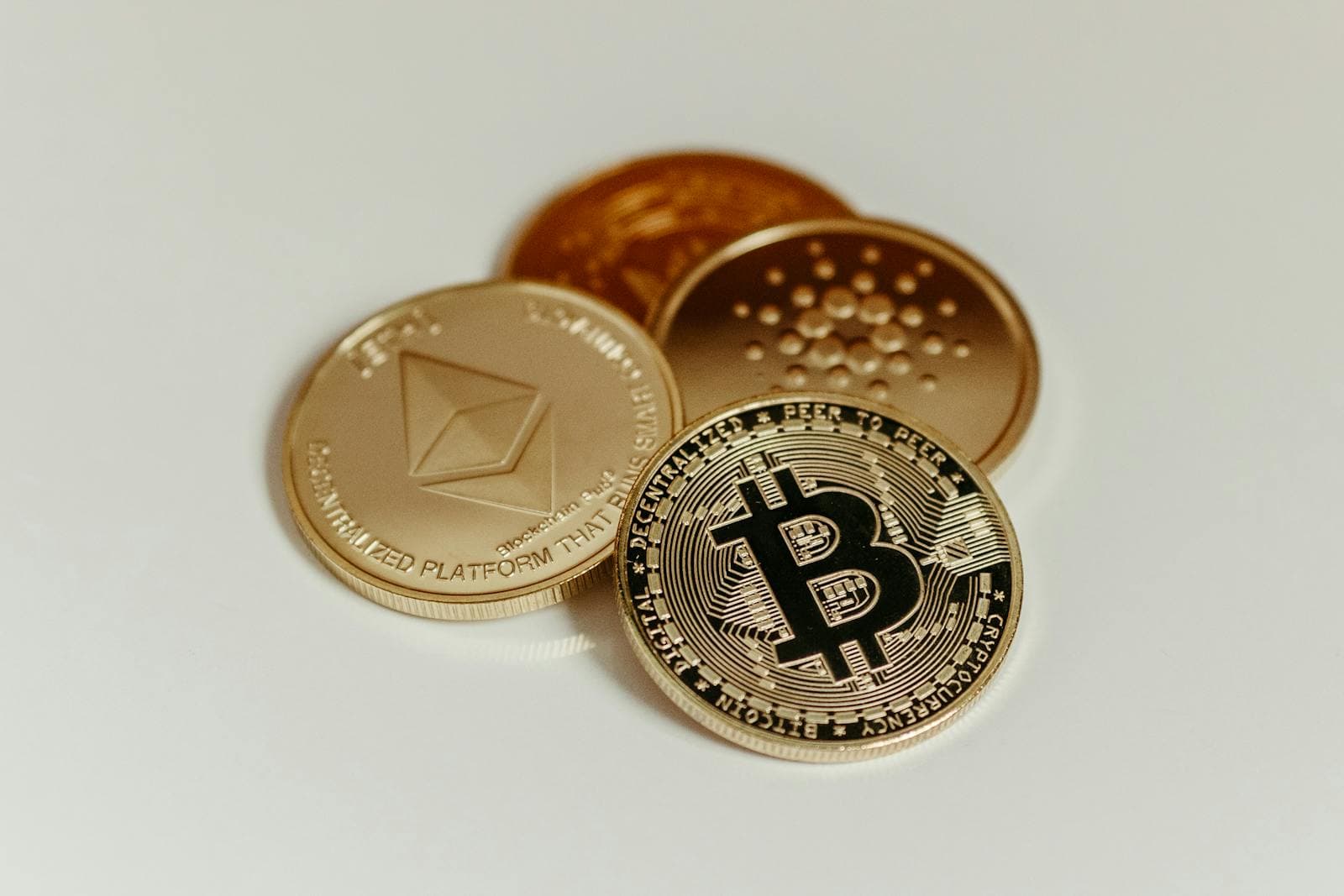
Five MAS-licensed exchanges, priced off their own fee pages in September 2026.

> Quick view: cheapest at real retail size is Independent Reserve at 0.50% flat. Easiest SGD in is Coinhako (PayNow free; 0.5% on a limit order, not the advertised 0.6%). The only free SGD out is Bitstamp. The catch nobody prints: the one-tap buy button adds a spread on top of the fee, and Bitstamp's is a fixed 1.8%.

1
Coinhako:

Coinhako: Singapore-Headquartered, Easiest SGD Onboarding

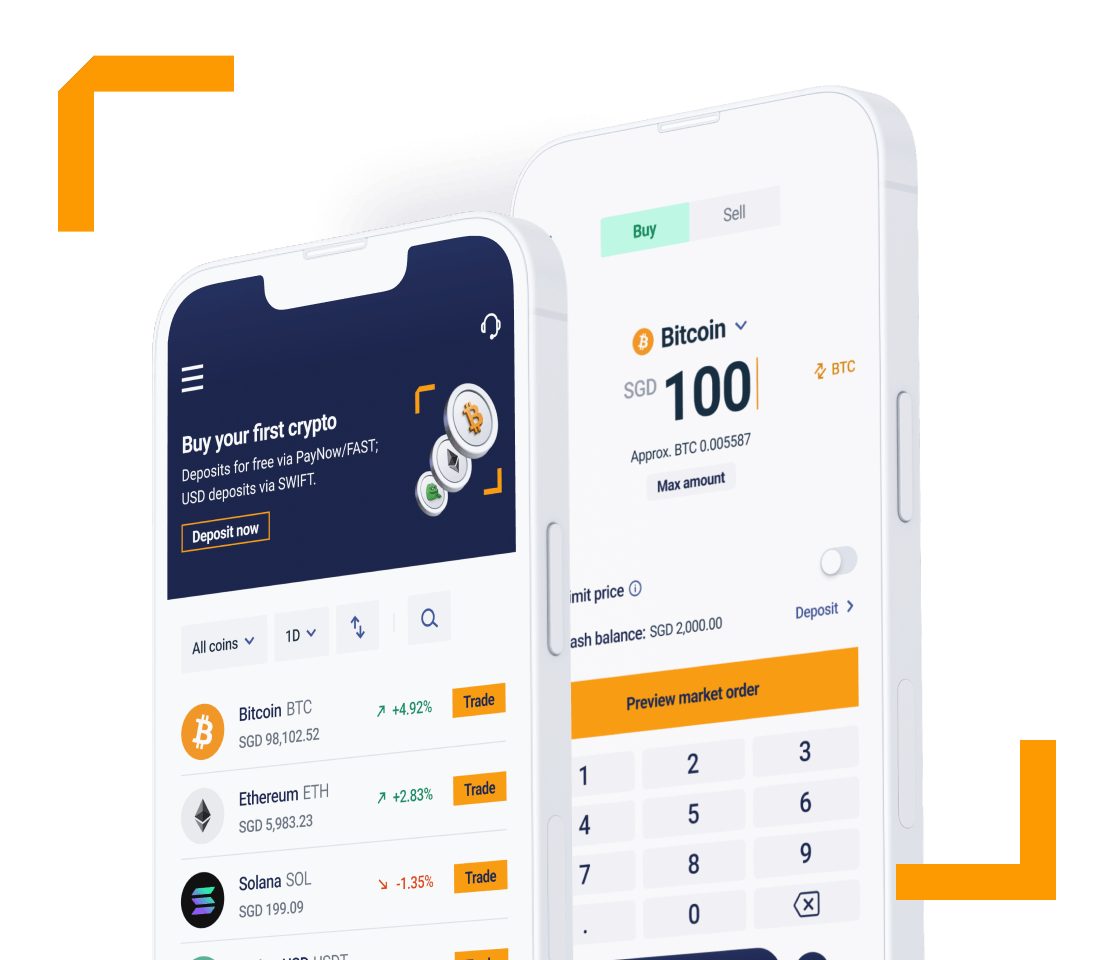
Founded 2014 in Singapore, Coinhako is the local-favourite, with 400,000+ customers. MAS Major Payment Institution (MPI) licensed since 2022, held through its Hako Technology entity. Supports 115 coins as of September 2026 (BTC, ETH, USDC, plus most major altcoins): its own coin-status page carries the live count, and it is nearly double what most roundups still quote. The killer feature is the SGD on-ramp, with PayNow deposits carrying NO fee. The 0.6% spot fee everyone quotes is only half the story, because Coinhako's own fee page also lists 0.5% on a limit order and 0.5% on a recurring buy, so 0.6% is what you pay for hitting market buy, not for using Coinhako. That same 0.6% also covers a card-funded purchase, which is worth knowing when Bitstamp charges 4% for the equivalent; funding with GrabPay instead costs 2.8%, and OTC trades are free. The cost the marketing skips is on the way out: SGD withdrawals are S$2, and USD withdrawals a punishing US$50, so keep the round trip in SGD. The app is functional, not flashy. New in 2026: Japanese financial group SBI Holdings completed a majority-stake acquisition of Coinhako effective 16 July 2026, after MAS cleared the deal. SBI Ventures Asset both injected fresh capital and bought out existing shareholders, making Coinhako a consolidated SBI subsidiary. Coinhako confirmed the change on its own blog; there is no rebrand, the platform runs as before, and the MPI licence is unaffected. If anything the deal strengthens the balance sheet behind your deposits. Best for: SG residents who want the easiest fiat-to-crypto on-ramp without juggling multiple banks/wallets, especially those new to crypto.

MAS MPI licensed (Hako Technology, PS20200556). SGD in free via PayNow, S$2 out. 115 coins. 0.6% market buy, but 0.5% on a limit or recurring buy.

Get Deal
2
Independent

Independent Reserve: Lowest Fees for Serious Volume

Australian-founded (2013), Singapore entity MAS-licensed. The pro pick for cost-sensitive serious traders. Trading fees start at 0.50% and are discounted on your rolling 30-day traded volume (recalculated every 4 hours), not on the size of any single trade. One detail worth catching: the thresholds on its fee page are quoted in AUD, not SGD, even on the Singapore site. They run 0.48% at A$50,000, 0.46% at A$100,000, 0.32% at A$1,000,000, 0.10% at A$5,000,000, 0.05% at A$50,000,000 and 0.02% at A$200,000,000. Be realistic about which tier you land in, because most retail investors sit at or near the 0.50% base, where the gap to Coinhako's 0.6% is real but modest. SGD in is free via PayNow and free via FAST for S$1,000 and above (S$2.50 below that); FAST withdrawals cost S$1.50. Supports 42 crypto assets, a deliberately focused list rather than the 'long tail' of altcoins. Strong for the institutional/HNW Australia-Singapore corridor. The app is functional but not as polished as Crypto.com. Best for: investors whose monthly volume genuinely reaches A$1,000,000+, where the tiering starts to compound.

MAS-licensed. 0.5% base, tiered by 30-day volume down to 0.02%. 42 coins. PayNow deposits free; FAST free above S$1,000; S$1.50 to withdraw.

Get Deal
3
Crypto.com:

Crypto.com: Global Brand Plus a Visa Card with Crypto Rewards

Founded in Hong Kong and now headquartered in Singapore (1 Raffles Quay), with the Singapore entity Foris DAX Asia MAS-licensed since 2023. Strongest brand recognition in this list (Matt Damon Super Bowl ad era). The Exchange lists 421 tradable assets, the second-broadest here. Two products to distinguish: Crypto.com APP (consumer-facing, 0.5-2.99% fees) vs Crypto.com EXCHANGE (pro/active trader), whose published schedule starts at 0.250% maker / 0.500% taker below US$10,000 of rolling 30-day volume and reaches 0.080% / 0.180% above US$500,000. Holding a CRO balance of 50,000 or more on the Exchange takes the maker fee to 0% and the entry-tier taker fee to 0.440%. Note that the widely-quoted '0.04%' floor is not on Crypto.com's own fee page, where the lowest published maker rate is 0.080%. The Crypto.com Visa card lets you earn 1-5% rewards in CRO (their native token) on everyday spending, a value-add none of the others offer. Best for: people who want a polished consumer app PLUS the optional Visa-card crypto rewards layer.

MAS-licensed via Foris DAX Asia. Exchange 0.250%/0.500% at entry tier, down to 0.080%/0.180%. 421 assets. Visa card with 1-5% CRO rewards on spending.

Get Deal
4
Coinbase

Coinbase Singapore: US-Listed, 5,000+ Supported Assets

Largest US crypto exchange by user count, NASDAQ-listed (COIN). Singapore entity MAS-licensed. Fees are the awkward part, and they got harder to pin down in 2026: Coinbase's own pricing disclosure no longer publishes a headline retail percentage, and the Advanced fee tiers now sit behind a login. What it does still state is that a spread is baked into the quoted price on every simple buy, sell and convert; that a simple limit order carries a 1% execution fee plus a Coinbase fee of up to 1.875% depending on payment method; and that Coinbase Advanced includes no spread at all because you trade the order book directly. Treat the order preview screen as the only real price, because the widely-repeated '1.49%' is a legacy figure Coinbase itself has stopped publishing. If you buy often, Coinbase One is the lever nobody mentions: it is a paid subscription that zeroes the trading fee (a spread can still apply, and it does not waive the 1% limit-order fee). Supports 5,000+ assets, the broadest in this list, including very long-tail altcoins. SGD via PayNow + FAST. The user-experience is the most polished of the 5, especially for first-time users. Best for: investors wanting a US-listed regulated counterparty AND access to the longest tail of altcoins, provided they use Advanced Trade rather than the simple buy button and read the order preview every single time.

MAS-licensed. NASDAQ-listed (COIN). 5,000+ assets. No headline rate on a simple buy, and a 1% fee on a simple limit order: use Advanced Trade, the only product with no spread.

Get Deal
5
Bitstamp:

Bitstamp: Oldest Exchange Globally (2011), Solid for HODL

Founded 2011 in Slovenia, it is the oldest continuously-operating crypto exchange in the world (predating Coinbase by 2 years). Robinhood's US$200M acquisition of Bitstamp was announced in 2024 and completed in June 2025, and the exchange now trades as 'Bitstamp by Robinhood'. It is the newest arrival on this list despite being the oldest brand: the Singapore entity only secured its MAS Major Payment Institution licence in July 2025, and SGD support went live on 28 October 2025, with deposits and withdrawals running through PayNow and an SGD/USD pair bridging into the global order books (SGD joins USD, EUR and GBP as its fourth fiat currency). Both directions are free, which makes Bitstamp the only exchange here that does not charge you to get your Singapore dollars back out. Its Unified Fee Schedule, reissued with effect from 1 September 2026, still puts the entry tier at 0.30% maker / 0.40% taker below US$10,000 of 30-day volume; the 0.20% maker rate quoted elsewhere only starts above that. And there is a trap in the simple interface: Basic Trading adds a FIXED 1.8% spread on crypto (0.5% on stablecoins) on top, plus up to another 0.5% when markets are volatile, while an Instant Purchase by card, Apple Pay or Google Pay costs 4%. Place a limit order on the order book and you pay the 0.30-0.40%; tap the buy button and you can pay six times that. Supports 166 coins, focused on the major and mid-cap names (no fringe altcoins). Track record is the differentiator: continuously operating since 2011 without a major hack or solvency event, an extreme rarity in this industry. Best for: long-term HODL portfolios where 'survives the next crisis' is a higher priority than 'has the newest altcoin' or 'cheapest fee'.

MAS-licensed Jul 2025. Founded 2011, the oldest continuously-operating crypto exchange globally. Only free SGD withdrawal here (PayNow). Order book 0.30-0.40%, but Basic Trading adds a fixed 1.8% spread. 166 coins.

Get Deal

Cheapest way to buy on each platform, and what the one-tap buy button really costs, taken from each exchange's own fee page and checked 7 Sept 2026.

ExchangeCheapest retail trade feeCost of the one-tap buySGD in / SGD outCoins listed
Coinhako0.5% (limit order or recurring buy)0.6% market buy, card included; no separate spread publishedPayNow free / S$2115
Independent Reserve0.50% (flat below A$50,000 of 30-day volume)Same 0.50%, one published ratePayNow free, FAST free above S$1,000 / S$1.5042
Crypto.com Exchange0.250% maker / 0.500% taker below US$10,000App pricing is separate from this Exchange scheduleSGD supported in-app421
Coinbase SingaporeNo headline rate for a simple buy; 1% limit-order fee plus up to 1.875%Spread inside the quoted price, shown at order preview; Advanced Trade has nonePayNow & FAST5,000+ (Coinbase's own figure)
Bitstamp0.30% maker / 0.40% taker below US$10,000Basic Trading adds a fixed 1.8% spread (4% by card)PayNow free both ways166

The full MAS-approved list: all 38 licensed digital payment token providers

There is no separate "crypto exchange licence" in Singapore, which is why the phrase "MAS-approved exchange" gets used so loosely. What exists is a Major Payment Institution (MPI) licence carrying the Digital Payment Token (DPT) Service activity under the Payment Services Act. On the MAS Financial Institutions Directory, last updated 4 September 2026, exactly 38 entities hold it.

The consumer-facing ones, where a Singapore resident can actually open a retail account: Hako Technology (trading as Coinhako), Independent Reserve SG, Foris DAX Asia (Crypto.com), Coinbase Singapore, Bitstamp Asia, Upbit Singapore, OKX SG, Blockchain.com (Singapore), Digital Treasures Center (dtcpay), XREX, Revolut Technologies Singapore, PayPal, moomoo Financial Singapore and Gemini Digital Payments Singapore.

The rest are custody, stablecoin, OTC and infrastructure firms. They are licensed, but not somewhere you sign up: Anchorage Digital Singapore, BitGo Singapore, Circle Internet Singapore, Cumberland SG, Fly Wing Technologies, FOMO Pay, GSR Markets, Hashkey Technology Services, Hex Technologies, JST Digital Trading & Technology, MetaComp, Paxos Digital Singapore, Paxos Global, QCP Trading, Ripple Markets APAC, sFOX, Sparrow Tech (Amber Premium Singapore), Straits Millennium, StraitsX Payment Services, StraitsX SGD Issuance, StraitsX USD Issuance, Sygnum, Triple A Technologies and Xfers.

Three things worth knowing about that list:

  1. Search the legal entity, not the brand. Coinhako is filed as Hako Technology, Crypto.com as Foris DAX Asia, dtcpay as Digital Treasures Center. Type the brand name into the directory and you will often get nothing back even when the platform is perfectly legitimate, which is exactly how people talk themselves out of checking.
  2. The list moves, so a roundup goes stale. Gemini is the clearest example. It was absent from the directory for years, which is why so many guides (this one included, until this update) used it as the standing example of a big brand without a Singapore licence. Gemini Digital Payments Singapore now holds an MPI licence covering both Digital Payment Token Service and Cross-border Money Transfer Service. A global brand and a heavy advertising budget are still not a licence, and plenty of heavily-advertised platforms remain off the list, but only the directory settles it on the day you look.
  3. A licence is not a guarantee. It means MAS has vetted anti-money-laundering controls, custody arrangements and capital adequacy. It does not insure your holdings, and it does not stop a licensed operator deciding to leave the market.

To check any platform yourself: open the MAS Financial Institutions Directory at eservices.mas.gov.sg/fid, filter Sector = Payments, Licence Type = Major Payment Institution, then Activity = Digital Payment Token Service.

How to choose between them

Crypto in Singapore has matured from "wild west" (2017–2021) into a properly regulated market. MAS licenses the operationally sound platforms and orders the rest to stop serving SG residents; the collapse of FTX in late 2022 vindicated the approach. Once you have confirmed a licence, the decision comes down to four checks:

  1. How does your SGD get in, and more importantly out? This is where most first-timers get stuck. PayNow deposits are free at all five here. Withdrawals are not: Bitstamp sends SGD back out via PayNow free of charge, Independent Reserve charges S$1.50 for an instant FAST withdrawal, and Coinhako charges S$2. If your bank blocks the transfer (DBS, OCBC and UOB all do this periodically for risk management), a digital bank like GXS, MariBank or Trust is usually the easier route.
  2. Work out your real fee, not the headline one. Fee tables are written to flatter. Check whether the discount runs on 30-day volume or per-trade size, whether the thresholds are even quoted in SGD, and, the big one, whether a spread sits inside the quoted price on top of the stated percentage. Bitstamp's order-book fee is 0.30%, but its one-tap Basic Trading adds a fixed 1.8% spread on crypto plus up to 0.5% more in volatile markets; funding that same purchase with a card costs 4%. Coinbase includes a spread in every simple buy and sell, publishes no headline percentage for one, and charges a 1% execution fee on a simple limit order on top of a Coinbase fee of up to 1.875%. Coinhako runs the other way: 0.6% if you hit market buy, 0.5% if you place a limit order for the same coin.
  3. Does it list what you actually want to buy? If you only want BTC and ETH, all five work and you should optimise for cost and ease. Long-tail altcoins narrow the field fast: Coinbase and the Crypto.com Exchange (421 tradable assets) are the broad ones, Bitstamp lists 166 and Coinhako 115, and Independent Reserve deliberately stops at 42.
  4. Track record under stress. Years of operation without a hack or a solvency event is a genuine signal, and it is the one thing a new entrant cannot manufacture.

First time buying? Keep it boring: start on one MAS-licensed exchange, fund a small amount by PayNow, buy a major coin with a limit order rather than a market order, and leave it there while you learn the interface. Turn on two-factor authentication with an authenticator app rather than SMS. Once your holdings pass a few thousand dollars, or you plan to hold for years rather than trade, move them to a hardware wallet and write the recovery phrase on paper, never in a photo, note app or cloud drive. Nobody legitimate will ever ask you for that phrase.

Related reads
Frequently Asked Questions

Are crypto exchanges legal in Singapore?

Yes, but ONLY those holding a MAS Major Payment Institution (MPI) licence that carries the Digital Payment Token (DPT) Service activity under the Payment Services Act. As of 4 September 2026 exactly 38 entities hold it, and most are custodians, stablecoin issuers or OTC desks rather than places you can open a retail account. The consumer-facing ones are Coinhako (filed as Hako Technology), Independent Reserve SG, Crypto.com (Foris DAX Asia), Coinbase Singapore, Bitstamp Asia, Upbit Singapore, OKX SG, Blockchain.com, dtcpay (Digital Treasures Center), XREX, Revolut, PayPal, moomoo Financial Singapore and, newly added during 2026, Gemini Digital Payments Singapore. Gemini is the reason to re-check rather than rely on any roundup: it was absent from the directory for years, which is how it came to be listed everywhere as an example of an unlicensed brand, and it now holds an MPI licence covering both Digital Payment Token Service and Cross-border Money Transfer Service. Unlicensed platforms cannot solicit SG residents and have been ordered to stop. Verify on the MAS Financial Institutions Directory at eservices.mas.gov.sg/fid before depositing, searching the legal entity rather than the brand name, and treat that list as the only reliable source.

Is Binance, Kraken or Bybit an MAS-approved crypto exchange in Singapore?

No. On the MAS Financial Institutions Directory, checked 4 September 2026, a search for Binance returns "No result for: binance", Kraken returns "No result for: kraken" and Bybit returns "No result for: bybit". None of the three holds a Major Payment Institution licence carrying the Digital Payment Token Service activity, which is the only thing that makes an exchange MAS-approved for Singapore retail customers. That is not an accusation of fraud: these are large global platforms that simply are not licensed to provide DPT services here, and an unlicensed platform cannot lawfully solicit Singapore residents. The practical consequences if you use one anyway are that you fall outside the MAS custody and anti-money-laundering safeguards, you have no recourse to MAS if something goes wrong, and your bank may block the transfer. If you want the approved list, it is the 38 entities set out above, of which the retail-account ones are Coinhako, Independent Reserve, Crypto.com, Coinbase, Bitstamp, Upbit, OKX, Blockchain.com, dtcpay, XREX, Revolut, PayPal, moomoo and Gemini. Check any name yourself at eservices.mas.gov.sg/fid, and search the legal entity rather than the brand.

Which Singapore crypto exchange has the lowest fees?

Independent Reserve is the cheapest at scale, but read the tier table before assuming you qualify, and note two things it is easy to misread. First, the discount is based on your rolling 30-day traded volume (recalculated every 4 hours), NOT the size of a single trade. Second, the volume thresholds on its fee page are published in AUD, not SGD, even on the Singapore site: the schedule starts at 0.50% and steps down to 0.48% at A$50,000, 0.32% at A$1,000,000, 0.10% at A$5,000,000, 0.05% at A$50,000,000 and 0.02% at A$200,000,000. So a retail investor putting through S$10,000 a month is still paying the 0.5% base rate either way. Crypto.com Exchange (not Crypto.com App) publishes 0.250% maker / 0.500% taker below US$10,000 of 30-day volume, reaching 0.080% / 0.180% above US$500,000; holding a CRO balance of 50,000 or more on the Exchange takes the maker fee to 0% and cuts even the entry-tier taker fee to 0.440%. For occasional retail buying, the cheapest real number on this page is easy to miss: Coinhako charges 0.6% on a market buy but 0.5% on a limit order or a recurring buy, which matches Independent Reserve's base rate while keeping the free PayNow on-ramp. Coinbase is the outlier at the expensive end: it publishes no headline percentage for a simple buy, because the cost is a spread inside the quoted price disclosed only on the order preview screen, while a simple limit order carries a 1% execution fee on top of a Coinbase fee of up to 1.875% depending on payment method. Only Advanced Trade is spread-free, and a Coinbase One subscription zeroes the trading fee but explicitly does not waive that 1% limit-order fee. And the number that catches people out: Bitstamp's order-book fee is 0.30% maker / 0.40% taker, but its one-tap Basic Trading adds a FIXED 1.8% spread on crypto (0.5% on stablecoins) plus up to 0.5% more in volatile markets, and paying by card costs 4%. Always compare the total you are quoted, not the percentage advertised.

Can I deposit Singapore Dollars (SGD) directly to a crypto exchange?

Yes, at all 5 MAS-licensed exchanges in this list. Most efficient methods: (a) FAST transfer from DBS/OCBC/UOB/SCB/Citi to the exchange's SGD bank account (free, T+0); (b) PayNow to the exchange's UEN (free, instant), which Coinhako, Crypto.com and Coinbase all support. (c) Xfers/wire transfer for larger amounts. Getting SGD back OUT is where they differ, and nobody advertises it: Bitstamp withdraws to PayNow free of charge, Independent Reserve charges S$1.50 for an instant FAST withdrawal, and Coinhako charges S$2 (its USD withdrawal is US$50, so keep the round trip in SGD). Note too: many SG banks (DBS, OCBC, UOB) periodically restrict transfers to crypto exchanges for risk management. If your transfer is blocked, switch to PayNow OR use a digital bank (GXS, MariBank, Trust) which generally don't restrict crypto-related transfers.

Should I keep my crypto on the exchange or move it to a self-custody wallet?

For amounts under ~S$5,000 OR for active trading: keeping it on a MAS-licensed exchange is reasonable, because they hold customer assets in segregated trust accounts and the MAS regime requires custody safeguards. For larger amounts (S$10,000+) OR long-term HODL: move to self-custody (a hardware wallet such as Ledger or Trezor), because even MAS-licensed exchanges face hack risk, market events (FTX) or operational issues. Rule of thumb: 'not your keys, not your coins' for serious holdings. Self-custody requires personal responsibility for the backup recovery phrase, and losing it means losing everything.

What changed with MAS's DTSP rules on 30 June 2025, and does it affect me?

On 30 June 2025 the Digital Token Service Provider (DTSP) regime under the Financial Services and Markets Act took effect. It closed a gap: firms based in Singapore that served ONLY overseas customers previously sat outside the Payment Services Act licensing net. From that date they must hold a DTSP licence or stop, and MAS said plainly that it had set the bar high and would grant such licences only in 'extremely limited circumstances', with no further transition period. The practical effect was a visible exit of offshore-facing operators from Singapore through 2025. For you as a Singapore retail user, it changes nothing about the five exchanges in this list, because all are licensed under the Payment Services Act to serve SG residents, which the DTSP regime explicitly does not disturb. What it does mean: if a platform pitches you on being 'Singapore-based' but is not on the MAS Financial Institutions Directory, that is now a much louder warning sign than it was before 2025.

My exchange is closing my account or pulling out of Singapore: what should I do?

This happens, and it is usually a licensing or commercial decision rather than anything to do with you. Work through it in this order. (1) Do not ignore the notice. Offboarding emails carry a deadline, and platforms can restrict trading before they restrict withdrawals. (2) Withdraw, do not wait: move fiat out to your own bank account, and move crypto either to a MAS-licensed exchange from this list or to your own wallet. Send a small test transaction first and check the network matches on both sides before moving the full amount. (3) Export your records BEFORE the account closes: full trade history and deposit/withdrawal statements. Once access is gone this is painful to retrieve, and you need it for cost-basis and tax purposes. (4) Watch for the scam that follows: closure notices are a favourite phishing hook. Only ever act on the platform's own app or a URL you typed yourself, and never share a recovery phrase or one-time code with anyone offering to 'help you migrate'. (5) If a licensed operator will not release your funds, escalate in writing, then to MAS. For choosing where to go next, the five exchanges here are all licensed to serve SG residents, but verify on the MAS Financial Institutions Directory before you move anything.

How do I actually buy Bitcoin, Ethereum, XRP or Solana in Singapore, step by step?

The mechanics are the same whichever coin you want. (1) Pick a licensed platform and check the legal entity on the MAS Financial Institutions Directory first. (2) Complete KYC with your Singpass or passport plus proof of address. This usually clears the same day, and you cannot deposit until it does. (3) Fund the account in SGD by PayNow to the exchange's UEN. It is free and near-instant at all five here, and it avoids the bank blocks that FAST transfers to crypto platforms sometimes hit. (4) Buy with a LIMIT order rather than the one-tap buy button. This is the single biggest cost saving available to a beginner: on Coinhako it is 0.5% instead of 0.6%, and on Bitstamp it moves you from a fixed 1.8% Basic Trading spread onto the 0.30-0.40% order book. (5) Enable two-factor authentication with an authenticator app, not SMS. Coin availability is the only thing that varies: BTC and ETH are on all five; XRP, SOL and DOGE are on Coinhako (115 assets), Bitstamp (166) and the Crypto.com Exchange (421); Independent Reserve's deliberately short list of 42 covers the majors but not much beyond. If you plan to hold rather than trade, move the coins to a hardware wallet once the position is worth more than a few thousand dollars.

#best crypto exchange singapore 2026#coinhako review singapore#independent reserve singapore#crypto com singapore#coinbase singapore#bitstamp singapore#mas licensed crypto exchange#mpi licence crypto singapore#cheapest crypto exchange singapore#sgd to bitcoin singapore#list of approved crypto exchanges in singapore#mas approved crypto exchange#how to buy bitcoin in singapore

You Might Also Like