Singapore's cosmetics regulator has published the test result it promised, and it is narrower than either side of this story suggested. On 28 August 2026, the Health Sciences Authority (HSA) said its testing detected minute amounts of Sudan IV in two samples of the Medicube PDRN Pink Collagen Capsule Cream sold by Venus Beauty Pte. Ltd., and that it instructed the recall of those affected batches on 26 August 2026. Sudan IV was not detected in the samples submitted by the two other companies marketing the cream here, APR SG Pte. Ltd. and Rirora International Pte. Ltd. The sale of the unaffected batches may resume.
> Quick view: Affected batch nos: 2E122I.2E117I and 2E191G.2E193G, both sold by Venus Beauty. If your tub carries one, stop using it and go to the seller about a refund. If it does not, HSA has not asked you to do anything. HSA's risk wording: the amounts are minute and unlikely to pose any serious health risks from previous use, with no local adverse events reported. Every future batch must now be lab-tested for the absence of Sudan IV before it can be supplied here. On both official storefronts we checked this afternoon, the cream is still not listed.
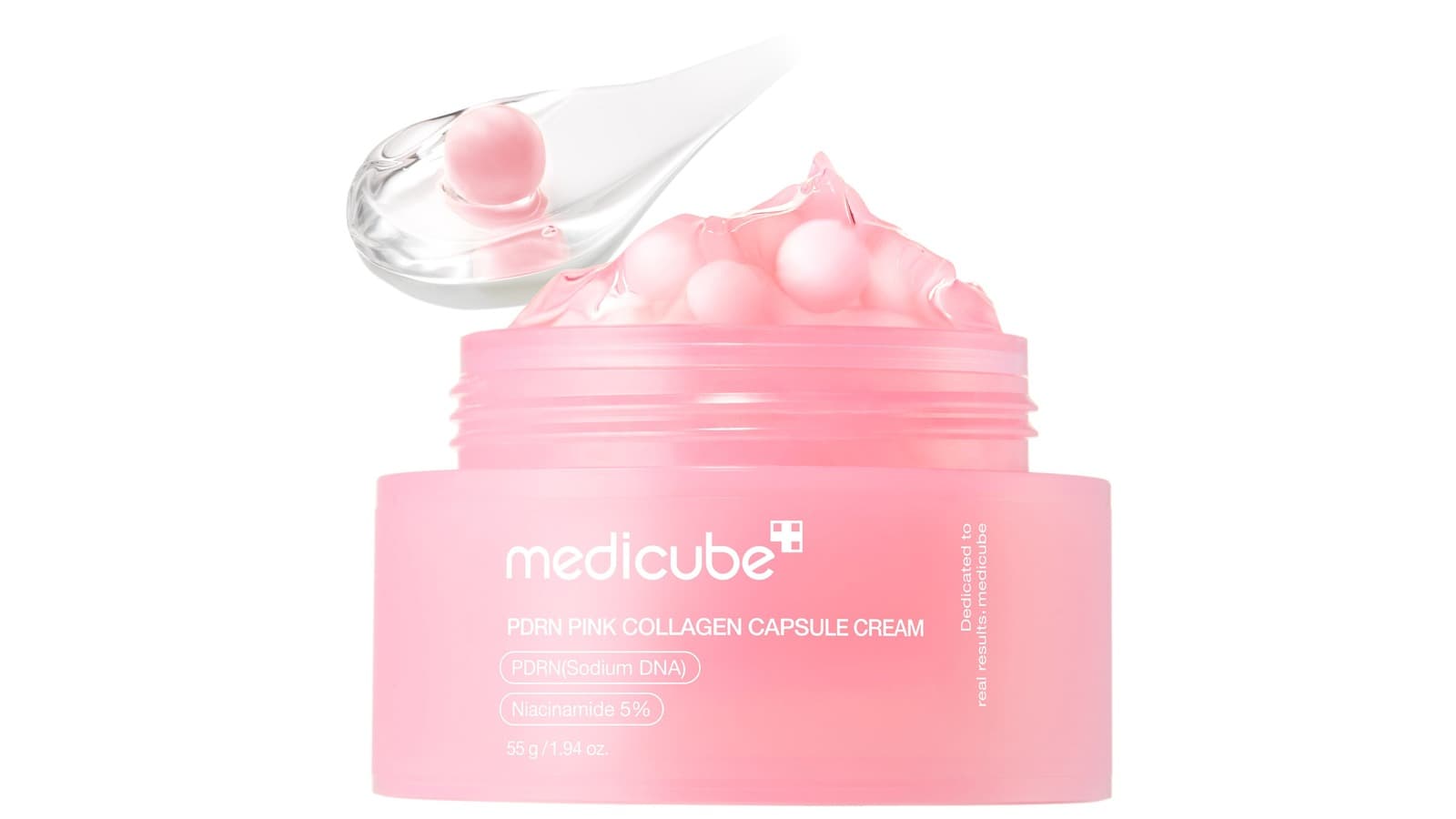
*Product photo: Medicube official.*
What HSA's own tests found
This is the result that was outstanding when the recall was first reported, and it settles the central question. HSA's statement has four moving parts:
- HSA tested product samples of the cream from all three companies marketing it in Singapore.
- It detected minute amounts of Sudan IV in two samples sold by Venus Beauty Pte. Ltd., batch nos 2E122I.2E117I and 2E191G.2E193G.
- It instructed the recall of those affected batches on 26 August 2026.
- Sudan IV was not detected in the samples submitted by APR SG Pte. Ltd. and Rirora International Pte. Ltd., and the sale of the unaffected batches may resume.
So the answer to "is Sudan Red in the cream sold in Singapore" is: in some of it, at minute levels, through one of the three companies selling it. Not the whole product line, not every tub, and not nothing.
The date almost every write-up gets wrong
HSA's suspension order is older than the news cycle around it. The regulator says it directed the three companies to suspend sales on 31 July 2026, one week after Hong Kong Customs' public alert of 24 July 2026, and then ran its testing. The statement most people read, the one that said sales were suspended and consumers should stop using the product, was reported on 21 August 2026, three weeks after the order itself.
That gap matters for one practical reason. Stock bought in August was already being sold against a standing suspension, which is a good argument for checking the batch code on anything picked up in that window rather than assuming a late purchase is newer and therefore safer.
The new gate on every future batch
The part with the longest life is the one at the end of HSA's statement. As an additional safeguard, HSA has instructed all three companies to ensure that every batch of Medicube PDRN Pink Collagen Capsule Cream intended for sale in Singapore is tested by an accredited laboratory for the absence of Sudan IV before supplying the batches locally, and to furnish those test reports to HSA.
That is a batch-by-batch condition on continued sale, not a one-off clearance. It applies to the two companies whose samples came back clean as well as to the one whose did not.
What to do, by which tub you own
- Your batch code is 2E122I.2E117I or 2E191G.2E193G. Stop using it. Keep the tub, the box and your receipt, and go back to whoever sold it to you about a refund. HSA has not published a central refund scheme, so the seller is your route. Marketplace purchase? Open a case in the app so there is a record, rather than only messaging the seller.
- Your batch code is something else. HSA has not asked you to do anything. Its recall covers the affected batches only, and the sale of unaffected batches may resume.
- You cannot find a batch code at all. The code is printed on the packaging, usually on the base of the tub or the outer carton beside the manufacturing and expiry dates. It is not on any online listing. If the box is gone and the tub is unmarked, treat it as stock you cannot verify and take it back to the seller.
- Your skin reacted while you were using it. See a doctor. You can report the reaction to HSA through the contact channels on hsa.gov.sg.
Where the stock actually stands today
Permission to resume selling is not the same as being back on the shelf. We checked both official Singapore storefronts on the afternoon of 28 August 2026, hours after HSA's statement:
- On themedicube.com.sg, Medicube's official Singapore store, the PDRN Pink Collagen Capsule Cream page still returns a 404, and the item is absent from all 66 products in the catalogue. Its siblings are all still there, including the PDRN Pink Peptide Cream at S$19.90 and the PDRN Pink Gel Cleanser at S$25.90.
- On venusbeauty.com.sg, the retailer whose batches failed, the Medicube brand page lists 23 items and this cream is not one of them.
If you go looking for it this weekend, what you find will most likely be marketplace or parallel-import stock rather than either official channel, which is precisely the stock whose batch code is hardest to verify.
Still true: what Sudan IV is, and the penalty
Sudan Red is not a skincare ingredient. It is a family of synthetic industrial dyes (Sudan I, II, III and IV) used to colour solvents, waxes and polishes. In Singapore they are prohibited ingredients in cosmetics under the Health Products (Cosmetic Products - ASEAN Cosmetic Directive) Regulations 2007, on the basis of potential carcinogenicity and the capacity to cause allergic reactions. There is no permitted level, which is why "minute amounts" still triggers a recall.
Supplying a cosmetic product containing a prohibited ingredient here carries a fine of up to S$50,000 and/or up to two years' imprisonment. HSA says it will continue to monitor the situation and take the necessary regulatory actions.
HSA also used the statement to repeat a general point worth keeping: buy cosmetics from reputable retailers with an established presence in Singapore, so there is recourse if something goes wrong, and note that a cosmetic product notification is not HSA approval. Notification lets HSA follow up if a safety concern arises. It is not an evaluation, endorsement or certification of the product.
Where the brand's lab reports sit now
APR, the Korean company behind Medicube, published third-party Korean lab reports dated 1 August 2026 reporting Sudan I, II, III and IV as 'Not Detected' at a 10 ppm detection limit, on samples it said came from its authorised production and quality-control process, and questioned whether the sample Hong Kong tested could be tied to its authorised distribution.
HSA's result contradicts that less than it first appears. The samples that failed were the ones sold by Venus Beauty, a third-party retail chain, and the samples submitted by APR SG came back clean. Both findings can sit side by side, and they point at the same practical advice: with a product this popular, the batch and the channel matter more than the brand name on the tub.
The bottom line
The precautionary phase is over and the picture is specific. Two batches, one retailer, minute amounts, recalled. Everything else may go back on sale, under a new requirement that each batch is lab-tested first. If you own a tub, the only question that matters now is the code stamped on the bottom of it.
*Details are from HSA's statement of 28 August 2026, its earlier suspension order of 31 July 2026, Hong Kong Customs' public alert of 24 July 2026, and APR's published test reports. Storefront checks are our own, made on the afternoon of 28 August 2026. Regulatory positions can change, so check hsa.gov.sg for the latest. This article is general consumer information, not medical advice.*