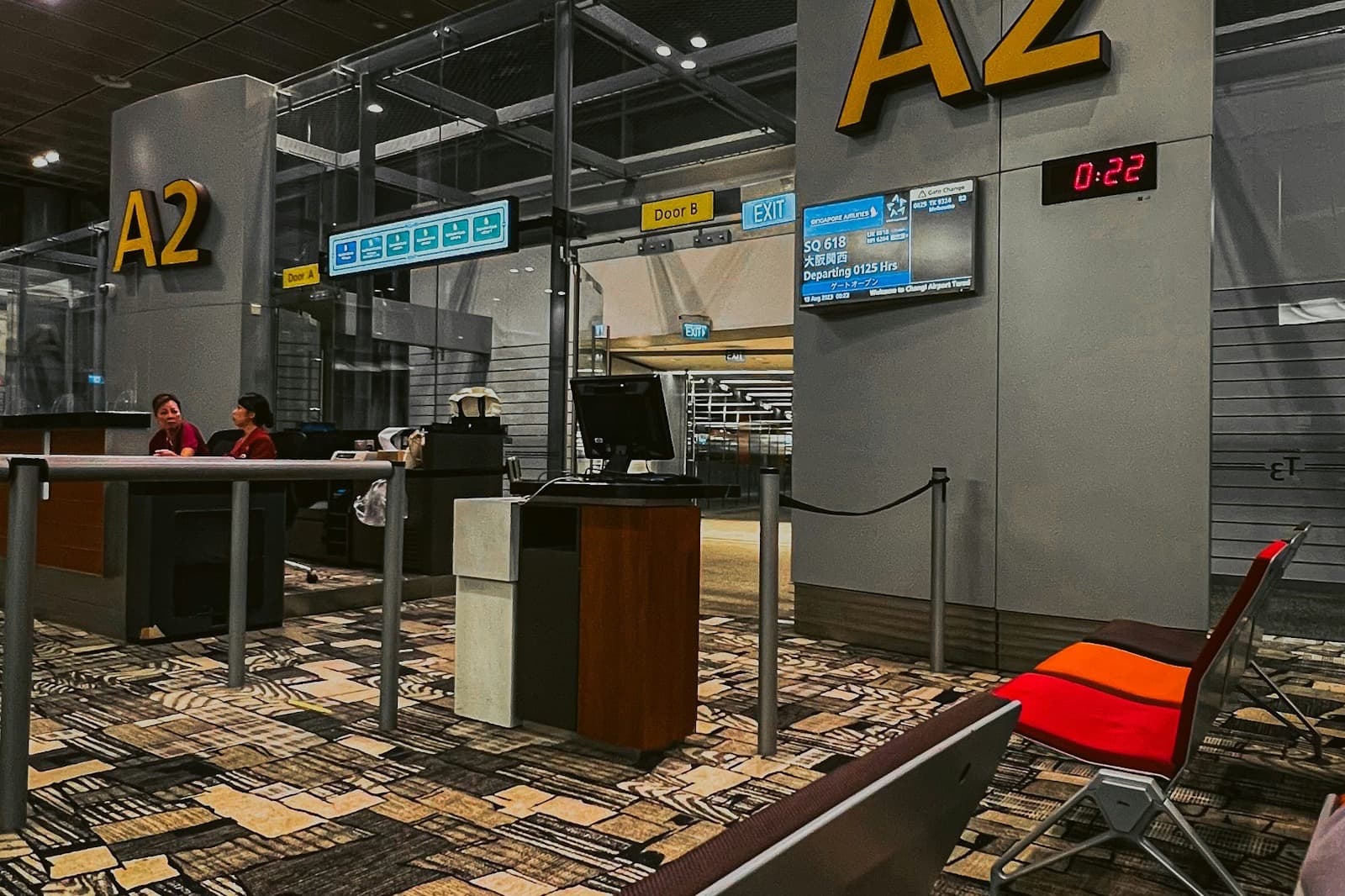
Singapore's Changi Airport is gearing up for a significant overhaul of Terminal 3. Acting Transport Minister Jeffrey Siow announced that the tender for the major upgrade will be called in the second half of 2026, with the works set to bring more digital technology and robotics into the terminal that first opened in 2008.
The announcement was made at the annual Changi Airline Awards, held at Shangri-La Singapore — a marquee evening for Singapore's aviation sector. The story was originally reported by The Straits Times, with Siow framing the upgrade as part of a broader push to keep Changi's existing terminals competitive while Terminal 5 is being built out.
What's actually changing
The upgrade will see more digital and robotic systems woven into how T3 runs day-to-day. Three areas are explicitly named in the announcement:
Self-service check-in: more automated kiosks and back-end processes, reducing reliance on staffed counters and shrinking queues at peak hours.
Security screening: newer screening technology aimed at moving travellers through faster, particularly during the morning and evening peaks when departures stack up.
Toilet cleaning: robots taking on routine sanitation work — yes, really. It's a small line in the announcement but it's a meaningful signal of how aggressively Changi is automating the unglamorous parts of running an airport.
The headline goal across all three is the same: lift T3's passenger handling capacity during the busiest periods. T3 has been one of Changi's busier terminals in recent years, and peak-hour congestion is consistently the single biggest pain point flagged by passengers.
Why this matters: T3 is the test-bed for T5
A lot of what gets installed at T3 in the next few years isn't just a refresh — it's Changi figuring out, in production, how to run a much more automated airport before Terminal 5 goes live. T5 is on track to open in the mid-2030s, and when it does, it will lift Changi's annual passenger capacity from 90 million to 140 million — a 55% increase that essentially turns Changi into a much bigger airport overnight.
Some of the technology being trialled at T3 is meant to scale up to T5 once the new terminal opens. Siow framed it as a continued bet on aviation, saying the industry will "remain on an upward trajectory" in the long term — justifying the spend on existing terminals before T5 comes online.
The bigger picture: S$3 billion across four terminals
The T3 upgrade is part of a S$3 billion investment that Changi Airport Group announced back in 2024 to upgrade Terminals 1, 2, 3, and 4. The four-terminal refresh is being staggered, and T3's tender call in the second half of 2026 is the next major milestone in that plan.
For travellers, the practical impact will be felt over the back half of the decade. Expect parts of T3 to be progressively touched, with passenger flow changes, possible gate reshuffles, and new self-service infrastructure rolling out as construction phases proceed. Changi has historically been good at minimising disruption during upgrade works — Terminal 2 went through a multi-year overhaul without ever fully closing — so don't expect chaos. But if you're flying out of T3 from late 2026 onwards, things will start visibly shifting.
What we'll be watching
Two things worth tracking from here. First, which contractors win the tender — the scope is big enough to draw international bidders alongside the usual Singapore construction firms. Second, whether the robotics and self-service rollout sticks to schedule given Singapore's tight construction labour market and the parallel demands of the T5 build.
We'll update this post once the tender goes live in the second half of 2026.
Source
Reported originally by The Straits Times (straitstimes.com) following Acting Transport Minister Jeffrey Siow's announcement at the Changi Airline Awards at Shangri-La Singapore.