Gold sat near record highs through 2026, which changed what a gold shop is actually selling you. The design on the tag matters less than the number the shop quotes per gram, and on 1 October 2026 that number ranged from S$208 to S$223 for the same 916 gold depending on which door you walked through. We re-checked the published per-gram rate on seven Singapore retailers' own websites on the same day, then looked at what each one adds on top: the workmanship charge, the 9% GST, and the promotion, if any. Every published rate fell by exactly S$9 a gram in thirteen days, so the order held for the first time: ValueMax cheapest, Maxi-Cash S$3 behind because it takes S$12 a gram off its own list, while its sister brand Goldheart takes off S$2 and SK Jewellery takes off nothing. Only one shop still puts its discount on the workmanship fee, which is the part of the bill that is not set by the market.
Gold near record highs means the shop you walk into matters more than the design you pick.
> Quick view: on 1 Oct 2026 the same 916 gold ran S$208/g at ValueMax and S$223/g at SK Jewellery and Poh Heng, with 999 gold from S$223 to S$242. Workmanship and 9% GST sit on top of that.
What changed between 18 September and 1 October 2026
We have now priced the same seven shops four times, on 26 August, 9 September, 18 September and 1 October. The first three checks each produced a different order. The fourth did not.
Every published rate fell by exactly S$9 a gram, on both 916 and 999, at all five shops that publish one. Because the cut was uniform, every gap held: ValueMax is still S$15 a gram below the dearest 916 quote, Maxi-Cash is still S$3 behind ValueMax, and Maxi-Cash still takes S$12 a gram off the same S$223 list from which its Aspial sister brand Goldheart takes S$2 and SK Jewellery and Poh Heng take nothing. So the group's pawnbroker remains S$10 a gram cheaper than the group's jeweller on an identical list price, which is worth more than any voucher on this page.
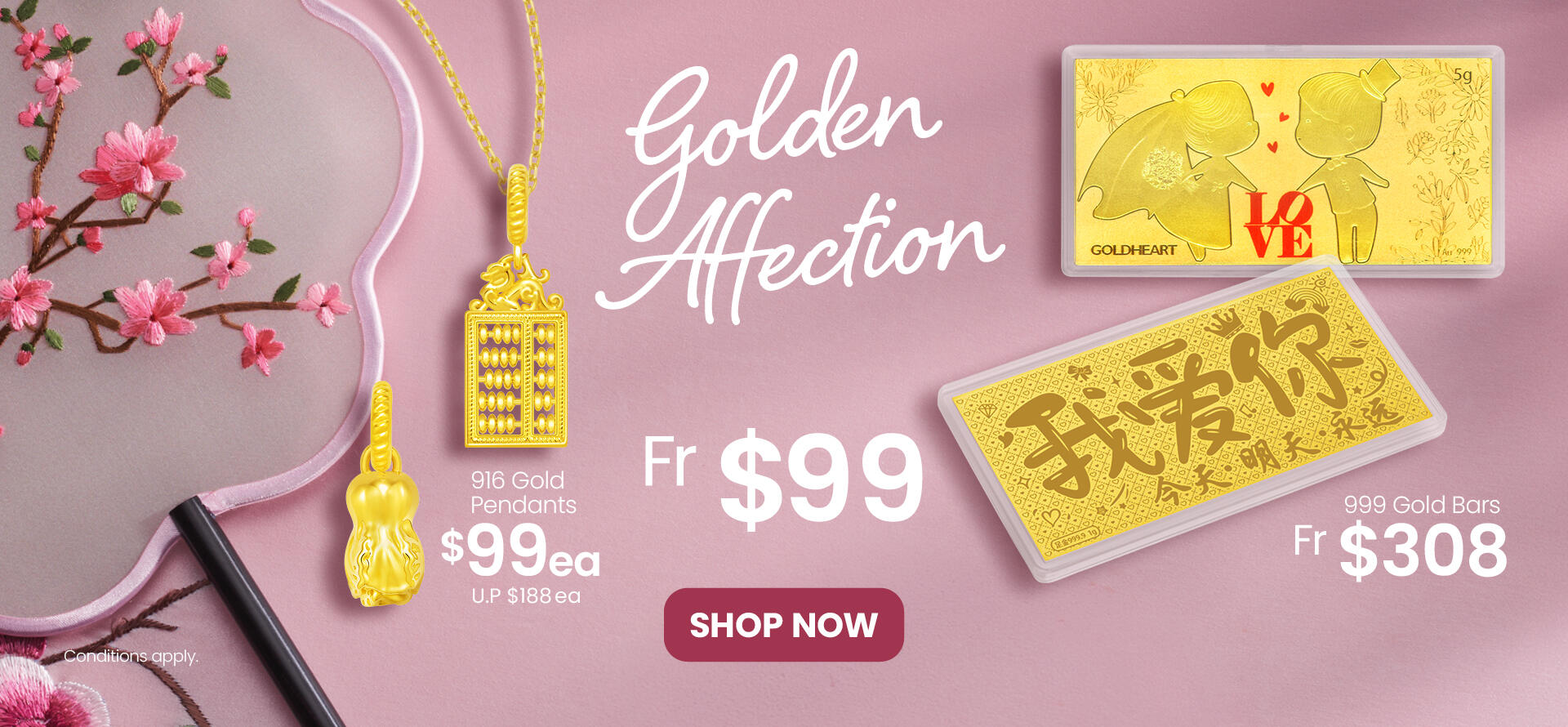
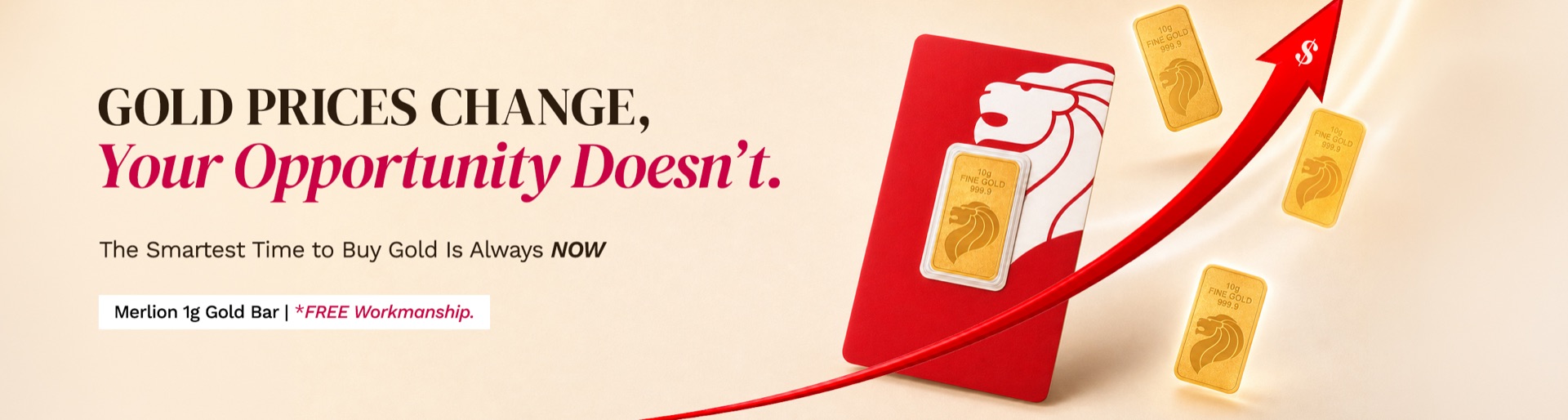
The promotions moved more than the prices. TAKA replaced its announcement bar with a Payday Sale (PAYDAY35, PAYDAY38 above S$199, PAYDAY41 above S$299). Its long-running TAKA35 and TAKA43 are no longer advertised, but both still applied when we tested them in a cart on 1 October. SK Jewellery's Gold Bar Sale is still up, with the Merlion 1g bar down from S$271 to S$264 as gold fell, and the deepest 999 pendant markdown is now 63%. SK's monthly promotion page, meanwhile, still displays the whole expired SHIOK and SK voucher table under a "Valid until 31 August 2026, 2359" line, a full month past the deadline, which is a standing reminder that a code on a live page is not the same as a live code. Goldheart's GH10OFF and its S$99 pendant banner are unchanged.
How a gold jewellery price is actually built
Three numbers make up what you pay, and only one of them is the same everywhere.
The metal. Gold weight multiplied by the shop's per-gram rate for that purity. 916 is 91.6% pure (22K) and is the Singapore default for jewellery; 999 is 99.9% (24K) and is softer, so it turns up more in bars, coins and pendants than in daily-wear rings. Every shop derives its rate from the same world market, but they do not land on the same number, and the 1 October 2026 spread of S$208 to S$223 per gram on 916, and S$223 to S$242 on 999, is the single biggest lever on this page.
The workmanship. Also called the making charge or craftsmanship fee. It pays for the labour and design, it is set by the shop rather than the market, and it can run from roughly S$50 to several hundred dollars per piece depending on intricacy. This is the part a shop can actually discount, which is why Poh Heng's 10% off workmanship is worth more than it sounds and why a "20% off gold" banner elsewhere usually means 20% off this fee, not off the metal.
The tax. Gold jewellery is standard-rated, so 9% GST applies. Investment-grade gold is not: bars, ingots, wafers and coins of at least 99.5% purity that meet the Investment Precious Metals criteria set by Singapore Customs are exempt. That is a real difference between buying a 999 gold chain and buying a 999 gold bar of the same weight, and it is worth knowing before you decide which one you actually want.
Who owns whom
Several of the best-known names are the same company. Aspial owns Lee Hwa, Goldheart, CitiGems and the Maxi-Cash pawnbroking chain. SK Jewellery Group owns SK Jewellery, Soo Kee, Love & Co and SK Bullion. So a shortlist of "five different jewellers" can easily be two companies. Worth knowing if you are walking a mall expecting five independent quotes.
One related note: Lee Hwa's own web store was showing an upgrade placeholder from 26 August to 18 September 2026, pointing shoppers to its Shopee boutique instead, and on 1 October it did not load at all. So there is still no online rate or promo from Lee Hwa to compare.
How to compare in practice
Ask for the per-gram rate and the workmanship charge as two separate numbers before you look at any discount. A shop that quotes a single all-in figure is not necessarily hiding anything, but you cannot compare it against anyone else. Then check whether the promotion applies to gold at all, because many jewellery codes exclude items priced at the daily gold rate.
Finally, weigh the code against the rate. A S$15 per gram difference on 916 gold is about 7% of the metal cost before workmanship, which is more than most cash-off vouchers return on a basket of that size. On a plain, heavy piece the cheaper per-gram rate usually wins; on an intricate piece where workmanship is a big share of the bill, the voucher and the workmanship discount matter more. And check the date on any rate you are quoted, including the ones above: every number on this page moved in the thirteen days before this check.
Related reads