Topic
#nea haze advisory 2026
2 articles
Singapore Haze: PSI Enters the Unhealthy Range on 4 September, the First Time Since 2023
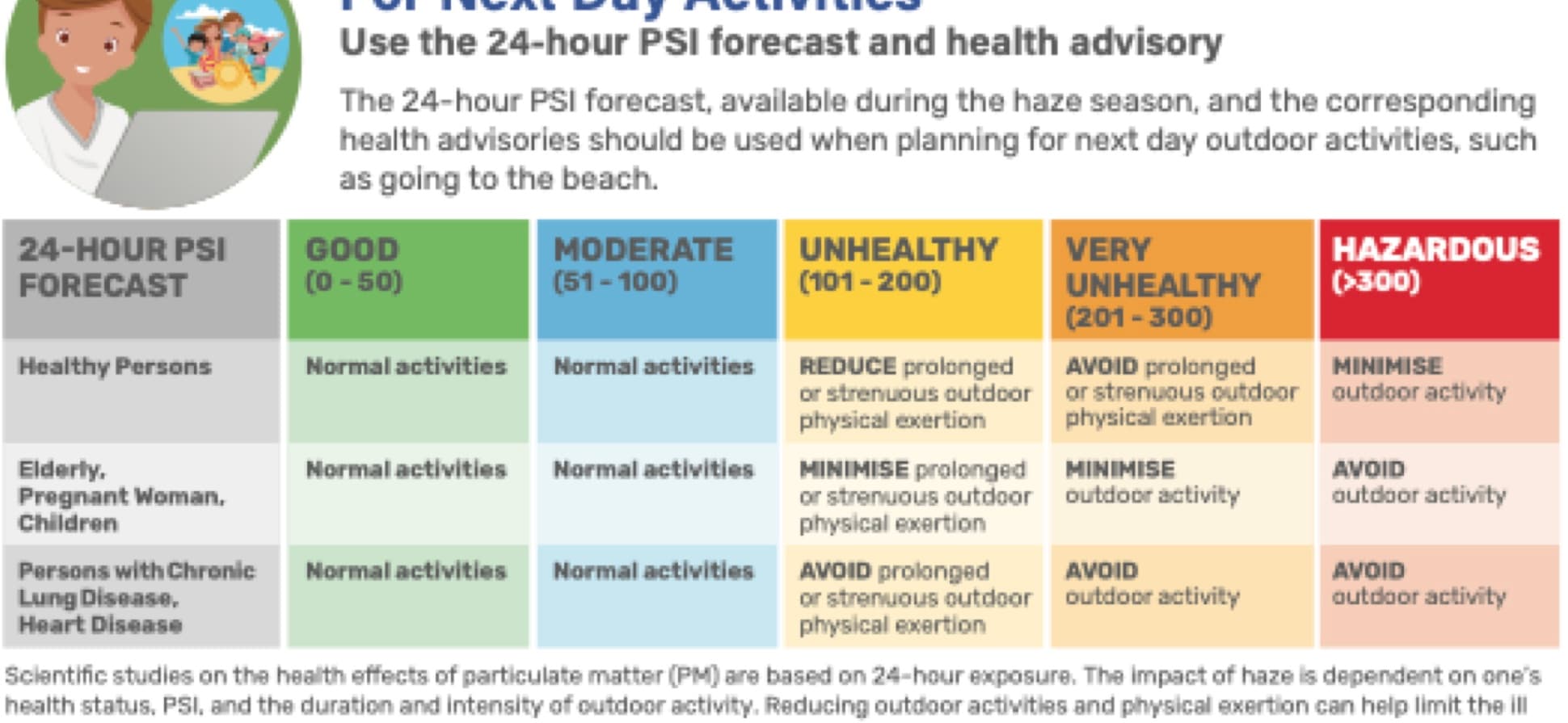
Air quality in central Singapore crossed into the Unhealthy band on the morning of Friday 4 September 2026. The National Environment Agency's 24-hour PSI read 103 in the central region at 8am and 105 by noon, while the west and east sat at 89, the north at 79 and the south at 75. AsiaOne reports it is the first time since October 2023 that a Singapore PSI reading has entered the Unhealthy range because of haze. NEA's outlook, updated at 11.13am, is not encouraging: dry conditions are expected to persist across much of the southern ASEAN region, hotspot activity should stay escalated, and the prevailing winds are blowing from the southeast or south. Here is what the Unhealthy band actually asks you to do, group by group, in NEA's own wording; which number to use for a jog this afternoon rather than a picnic tomorrow; what the Ministry of Health says about N95 masks (less than you think at this level); and the exact status of the Haze Subsidy Scheme, which is not open today but is worth knowing before it is.
Singapore Haze Watch (August 2026): PSI Is Creeping Up and Some Preschools Are Trimming Outdoor Play — the PSI Bands Explained, and How to Protect Your Family
Singapore's haze risk is climbing. As of the afternoon of 9 August 2026, the 24-hour PSI reached 81 in central Singapore — the higher end of the 'moderate' band — and the National Environment Agency (NEA) has warned that dry conditions in the coming week could push it higher if fires in Sumatra and Kalimantan persist. It follows the Singapore Institute of International Affairs rating the region 'Red' in its 2026 Haze Outlook, with August and September flagged as the peak danger period. Children are among the groups advised to cut back outdoor activity when the air worsens, and some preschools have already started moving playtime indoors as a precaution. Here's what the PSI bands actually mean, and practical steps to protect kids, the elderly and yourself — plus where to check the live readings, which change hour to hour.